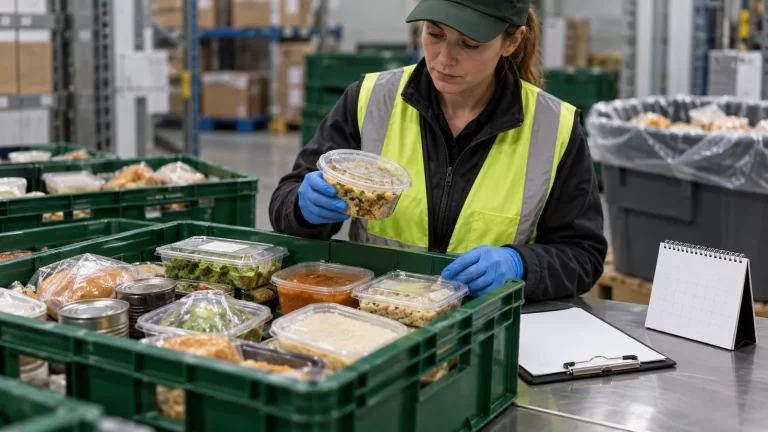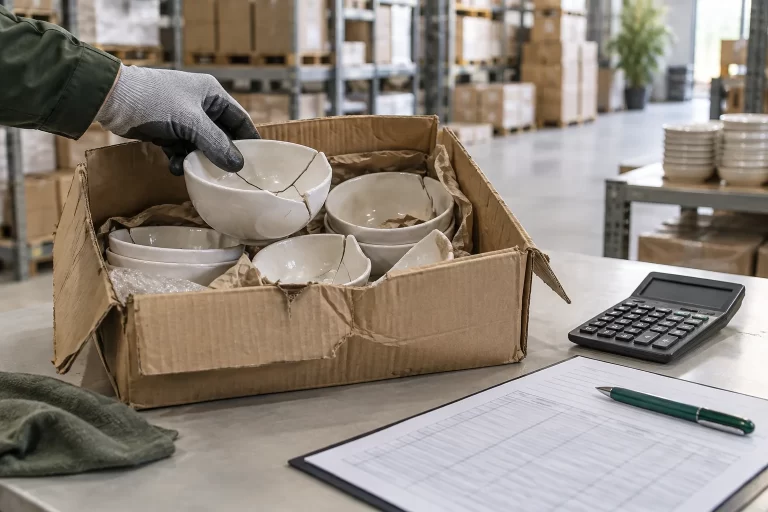



In short: The tax administration treats goods destroyed because they reached the end of their shelf life as lost goods and requires you to correct the VAT. The Council of State’s 9th Chamber, however, has ruled that goods destroyed in accordance with proper procedure do not count as lost goods. Whichever path you choose, your documentation must be complete. In a disputed case, requesting an advance tax ruling before acting is the safest route for VAT on destroyed goods.
The pharmaceutical, food, and cosmetics sectors destroy large volumes of product every year. The product’s expiry date has passed, or the applicable regulations no longer allow you to sell it. The question is always the same: can the VAT paid when purchasing these products remain deductible? However, the tax administration and the courts answer this question differently. This article explains both views and their practical consequences.
What does the tax administration say about destroyed goods?
The administration’s view sits in Section III/C-2.4 of the VAT General Implementation Communiqué. This section covers goods that are past their usable life or have become unusable. According to the Communiqué, such destroyed goods qualify as lost goods, so you cannot deduct VAT on destroyed goods. The Communiqué goes one step further: the outcome does not change even if the destruction takes place before an official commission or the valuation commission.
If you previously deducted it, you must correct it. You make the correction on VAT Return No. 1 for the period covering the destruction date. From the March 2026 tax period onward, you enter the amount in the Other Transactions table under code 507, “VAT Previously Deducted on Lost Goods”; under the earlier layout it went on the “VAT to Be Added Back” line. We covered this view of VAT on destroyed goods, and the overpayment risk created by rate changes, in our article on not overpaying VAT in your disposal process.
Why does the Council of State take a different view?
The Council of State’s 9th Chamber, in a 2004 decision (E.2002/3313, K.2004/4389), reviewed a dispute concerning pharmaceuticals. The medicines had passed their usable life, and the valuation commission had set their value at zero. The tax administration also knew of and supervised the destruction. The Chamber ruled that the VAT paid on these medicines was not lost-goods VAT. As a result, it found the VAT deductible.
The reasoning behind the decision is this: the goods did not disappear on their own. Instead, regulations made them unfit for sale, and the company destroyed them in a controlled manner. The loss is therefore an ordinary consequence of business activity. For this reason, the lost-goods rule does not apply to this VAT on destroyed goods.
Is the debate settled?
No. Tax practitioners cite the decision as an established reference. However, the tax administration has not changed its position in the Communiqué, and there is no clear, consistent body of subsequent case law that either overturns or firmly confirms this line. A business that follows the Council of State’s approach may therefore face a tax assessment on audit. In that case, it must pursue its rights through the courts — a path with both a time and a cost.
What difference does the choice make in figures?
A pharmaceutical distribution company destroys expired product with a cost of TRY 1,500,000. The VAT charged on the purchase of the products is TRY 300,000. The figures are illustrative only.
| Approach | VAT to Be Added Back | Risk |
|---|---|---|
| Administration’s view (Communiqué) | TRY 300,000 | Low; no dispute arises |
| Council of State’s line | TRY 0 | Possible tax assessment and litigation on audit |
The difference is TRY 300,000. It is possible to defend this position, but doing so requires a strong file.
Which documents are required for either path?
The facts underlying the Council of State’s decision are effectively a checklist. Whichever path you choose, your file should include:
- A valuation commission decision or an independent expert report establishing that the value has dropped to zero.
- An official report showing that the destruction took place under the knowledge and supervision of the tax administration.
- A breakdown of the type, quantity, batch number, and cost of the destroyed products.
- Records showing how the products reached the facility, including sealed-vehicle and weighing documents.
- Where possible, an advance tax ruling obtained from the tax office before the transaction.
The legal path for a decline in value is Article 278 of the Tax Procedure Law (VUK). For goods that require destruction, Article 278/A offers a separate path. Operations, warehouse and accounting teams should keep these records in one shared file.
Why does an advance tax ruling matter so much?
An advance tax ruling (özelge) is the Revenue Administration’s written answer to your specific question. It only binds the taxpayer who requested it, but it removes uncertainty for that taxpayer. In areas where the administration’s view on VAT on destroyed goods remains contested, an advance tax ruling is the strongest safeguard you can obtain before acting. So you should not skip this step, especially for large and recurring destruction operations.
What does Scrap do in this process?
Both paths share one common denominator: evidence. As Scrap, we document every step of the destruction process — assessment, count, sealing, transport, weighing, and disposal. We prepare the reports to align with the valuation commission and tax office process. This way, whichever path you choose, your file on VAT on destroyed goods is defensible. For the income and corporate tax side of destruction, see our article on whether the cost of lost goods can be expensed.
Frequently asked questions
According to the tax administration, is VAT on destroyed goods deductible?
No. Under Section III/C-2.4 of the VAT General Implementation Communiqué, goods destroyed because their usable life has expired qualify as lost goods. Even if the destruction takes place before an official commission or the valuation commission, you cannot deduct the VAT, and you correct it in the period covering the destruction date.
What did the Council of State rule on this issue?
In decision E.2002/3313, K.2004/4389, the Council of State's 9th Chamber ruled on VAT on destroyed goods for medicines whose value the valuation commission had set at zero and which the company destroyed under the tax administration's supervision. The Chamber held that this VAT was not lost-goods VAT, so the company could deduct it.
Which path should I choose?
The issue remains disputed. If the amount is significant, requesting an advance tax ruling from the tax office before acting is the safest route. Both paths require a valuation commission decision and an official destruction report.
What should the destruction report include?
The type, quantity, batch number, and cost of the destroyed products; the date and location of the destruction; and the tax administration's supervision. Transport and weighing records strengthen the file.
Sources
- VAT Law No. 3065, Article 30/c
- VAT General Implementation Communiqué, Section III/C-2.4
- Council of State, 9th Chamber, E.2002/3313, K.2004/4389 (Council of State case search)
- Tax Procedure Law No. 213 (VUK), Articles 278 and 278/A
- Ahmet Serdar Uysal, Certified Public Accountant (YMM), information note on lost goods under Article 30/c of the VAT Law (2026). We drew on this note in preparing this article; interpretations and any errors are Scrap’s own.
This article reflects the legislation in force on its publication date. It is for general information only and does not replace tax advice. Consult your financial advisor before acting on a specific case. For a documented, traceable destruction process, you can fill out our request form.
İmha Sürecinizi Planlayalım
Vergi avantajı takvimi ve imha süreciniz hakkında ücretsiz danışmanlık alın.