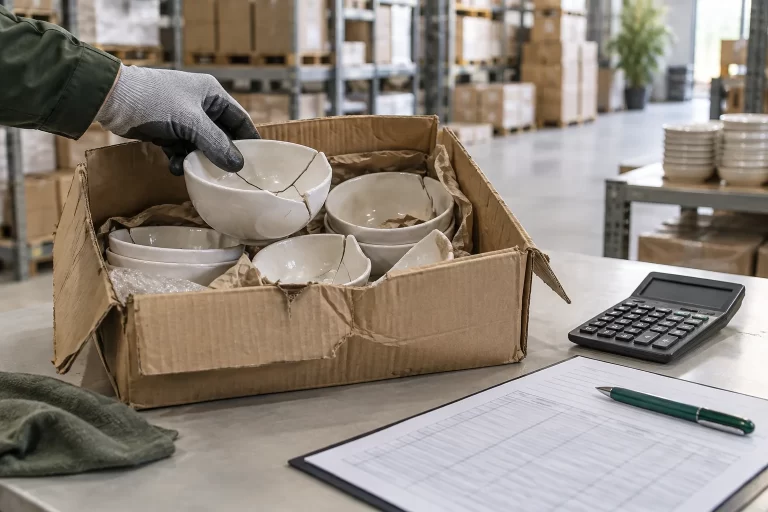


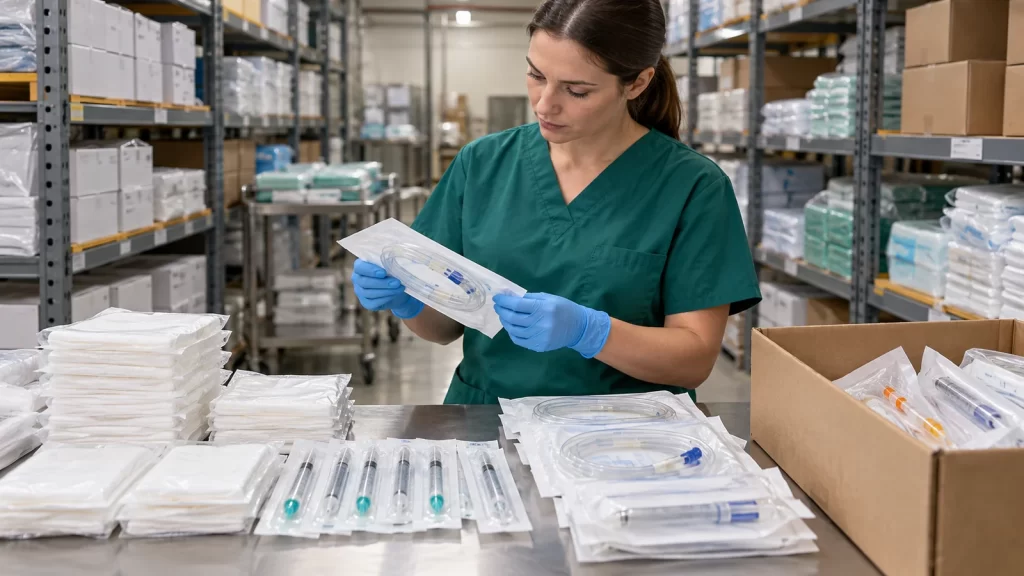
In short: Expired sterile supplies disposal is the way to remove expired sterile products and medical device stock in a registered manner. The date on sterile packaging shows the period in which the manufacturer states that you can use the device safely. Once the expired product becomes waste, the Waste Management Regulation applies. So you separate the product, count it, deliver it to a licensed facility, and keep the documents.
Syringes, catheters, and dressings wait in the warehouse of a hospital supplier. One batch expires in two months. Another batch cannot be sold because its box was crushed. So what do you do with this stock, and which records do you keep? This article explains expired sterile supplies disposal and the fate of medical device stock in order.
What does the label date say in expired sterile supplies disposal?
The Medical Device Regulation makes some details mandatory on sterile packaging. For example, the packaging states that the device is sterile and names the sterilization method. It also shows a clear time limit for safe use or implantation, expressed at least in year and month (Annex I, point 23.3).
In other words, the date shows the period of assurance that the manufacturer gives. So do not use a product after that date. Make the decision on how to dispose of it together with your quality officer. Moreover, if the packaging is opened or damaged, the regulation presumes that the original condition of the device is adversely affected (Article 16).
Why should expired stock not return to the market?
Even a well-meant discount can be risky. A product that still carries its label and logo mixes easily with counterfeit or repackaged goods. For single-use devices, the regulation also sets a clear rule. Anyone who reprocesses a single-use device to make it fit for reuse counts as a manufacturer. Therefore, that person takes on all the manufacturer’s obligations (Article 17).
Storage conditions are a separate responsibility. While a device is under their responsibility, the importer and the distributor make sure that storage and transport conditions do not jeopardize its compliance. They also follow the conditions that the manufacturer sets (Articles 13 and 14). Indeed, if storage conditions fail, a product can lose its fitness even before its date passes.
Which waste rules apply to expired sterile supplies disposal?
Once the product becomes waste, the Waste Management Regulation applies. The waste producer does the following (Article 9):
- First, it collects the waste separately and stores it temporarily.
- Then it keeps records of the waste, and packs and labels it properly.
- After that, it sends the waste to a facility that holds a permit or an environmental license.
- Finally, it fills in the previous year’s waste declaration form online by the end of March each year, and keeps a copy for five years.
Temporary storage time also depends on the waste type. Hazardous waste waits at most 6 months, and non-hazardous waste at most 1 year (Article 13). The waste owner sets the waste code under the code-setting rules (Article 12).
There is also the Medical Waste Control Regulation. It covers medical waste that arises from the activities of health institutions (Article 2). So a supply that a hospital used can fall within its scope. A product that waits unused in a warehouse usually falls under the general waste rules. Settle which rule applies, and the waste code, together with your facility.
How do you carry out expired sterile supplies disposal step by step?
The process has six steps. Each step has an output, and that output goes into your file:
- Detection and separation: First, you separate the expired product, or the product with damaged packaging, from sales stock. Then you move it to a separate area and mark it “set aside for disposal”.
- Inventory: Afterward, you list the product name, model and lot number, expiry date, quantity, and warehouse.
- Return option: You settle the terms for return or exchange with your supplier in writing. If no return is possible, you move on to disposal.
- Record: Then you count the goods and draw up a record. The record states the date, place, product, lot, quantity, reason, and method. You also add the signatures and photos.
- Sealed transport and disposal: The goods leave the warehouse in a sealed vehicle and go to a licensed facility. The facility makes the product unusable.
- Documents and retention: Finally, you put the record, the delivery document, the weighing slip, and the photos in your file.
The regulation does not list the form of this record. The content above is the minimum layout that we recommend. For stock that comes from a recall, see our article on medical device recall.
Which records do you keep in expired sterile supplies disposal?
On the waste side, records follow a time order. They state the waste type, the waste code, the quantity, the source, the facility it went to, and the way it moved. Facilities and producers keep these records for at least five years (Waste Management Regulation, Article 15). On the product side, distributors and importers must be able to show the Agency from whom they took the device and to whom they gave it. This period runs for at least 10 years after the last device is placed on the market, and for 15 years for implantable devices (Medical Device Regulation, Articles 10 and 25).
What is the tax side of expired sterile supplies disposal?
Article 278/A of the Tax Procedure Law covers goods that you must destroy because of the passing of an expiry date and similar reasons. For taxpayers with recurring disposals who apply, the article treats the equivalent value of the destroyed goods as zero, up to the agreed destruction rate. Moreover, the taxpayer keeps every record and document on the disposal and presents them when needed.
However, it changes the result whether the goods count as lost or as impaired. Indeed, we explained this difference in our article on lost goods and impaired goods. This article does not calculate any tax result, so get your accountant’s opinion before you act. In its medical device waste disposal service, Scrap runs these six steps on your behalf.
Frequently asked questions
Can I use a sterile product past its expiry date?
The date on the label shows the time limit that the manufacturer gives for safe use (Annex I, point 23.3). So do not use a product after that date. Make the decision on how to dispose of it together with your quality officer.
What happens to a product with damaged or opened packaging?
The regulation presumes that the original condition of a device is adversely affected if its sterile packaging is opened or damaged (Article 16). Separate this product from sales stock and move it to the disposal or return route.
Can I return the stock to the supplier?
That depends on your contract and on your supplier's terms. The legislation does not grant a right of return. If a return is not possible, you treat the product as waste and move on to documented disposal.
Which records should I keep, and for how long?
You keep waste records for at least five years (Waste Management Regulation, Article 15). For the device itself, you must be able to show its supply chain for at least 10 years after the last device is placed on the market, and for 15 years for implants.
Sources
- Medical Device Regulation (Official Gazette, June 2, 2021, No. 31499 bis), Articles 10, 13, 14, 16, 17, and 25, and Annex I, point 23.3
- Waste Management Regulation (Official Gazette, April 2, 2015, No. 29314), Articles 9, 12, 13, and 15
- Medical Waste Control Regulation (Official Gazette, January 25, 2017, No. 29959), Article 2
- Tax Procedure Law No. 213, Article 278/A
This article follows the legislation in force on its publication date. It is for general information and does not replace legal or tax advice. Therefore, get the opinion of your legal counsel and your accountant before you act. If you want to plan the process for your stock together with us, you can fill in our request form.
İmha Sürecinizi Planlayalım
Vergi avantajı takvimi ve imha süreciniz hakkında ücretsiz danışmanlık alın.