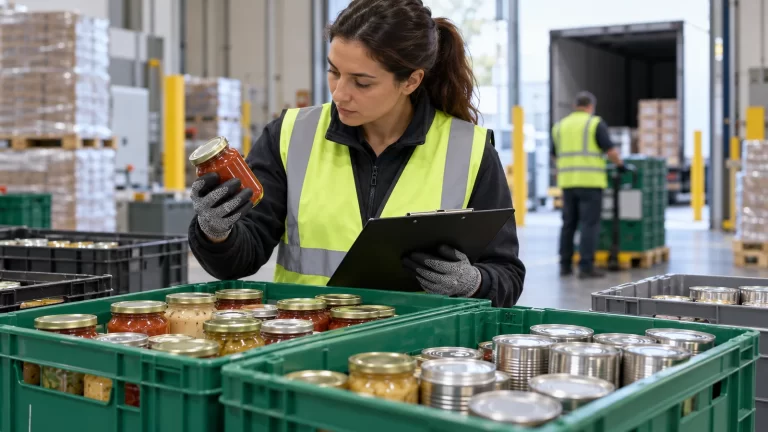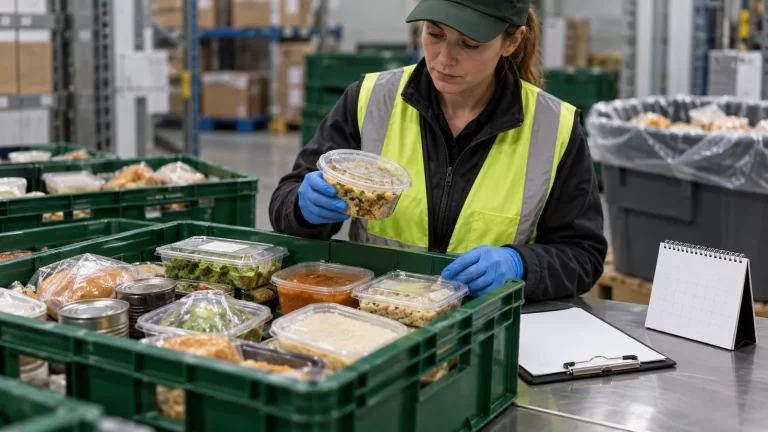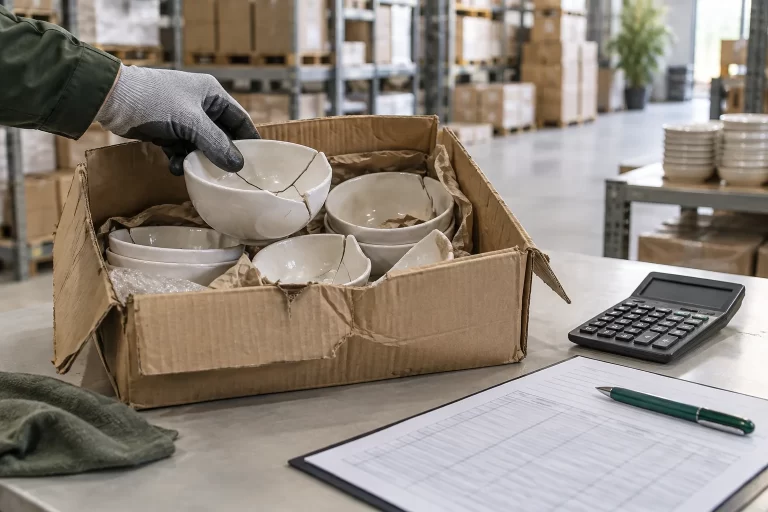


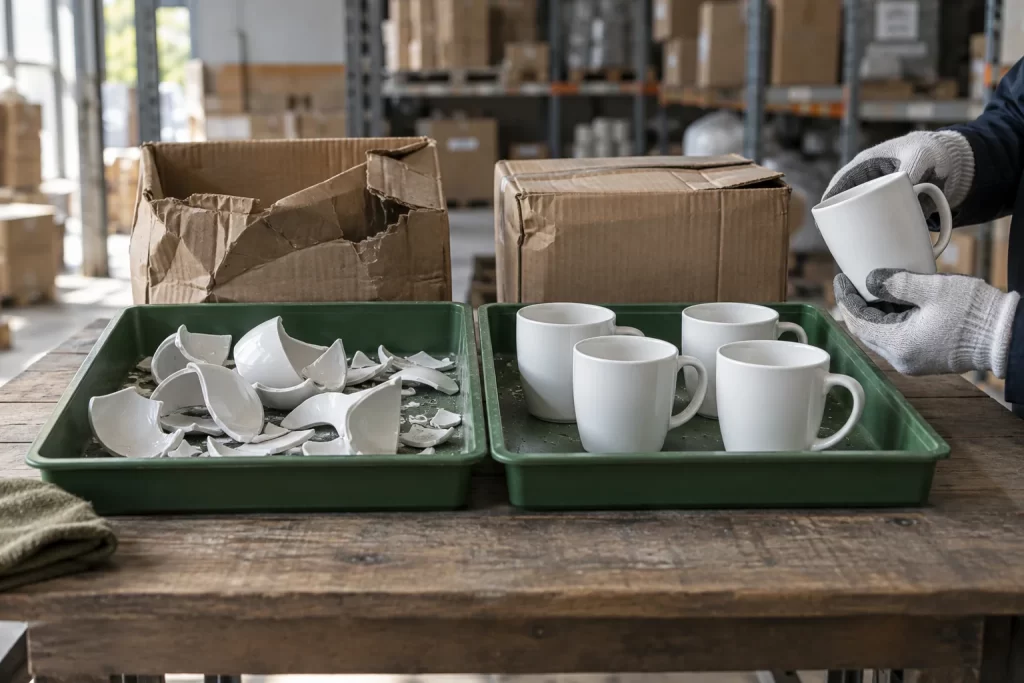
In short: If the goods physically no longer exist, they count as lost goods (zayi mal), and you correct their VAT. If the goods are still there but their value has dropped, they count as impaired goods, not lost goods, and you keep the input VAT deduction. Both situations can occur in the same event. In that case, you split the stock into groups based on the valuation commission’s findings, and each group follows its own rule.
Picture a warehouse hit by a flood. Some boxes rot completely. Water soaks others, but the product inside remains sellable. Still others escape the flood entirely. Accounting sees a single event, but tax sees three separate situations. This article explains that distinction.
What is the difference between lost goods and impaired goods?
The difference comes down to one question: do the goods still exist? Lost goods have completely left the business’s assets — burned, rotted, stolen, or gone missing. In this case, Article 30/c of VAT Law No. 3065 applies, and you correct the VAT.
Impaired goods (goods with a significant decline in value), by contrast, are still there. They may look out of fashion, carry damaged packaging, or lag technically, yet a business can still sell them at a lower price. In this case, the lost-goods rules do not apply. The VAT paid at purchase stays deductible. The outcome does not change even if you sell them at a lower price.
How is impairment documented?
The legal path for impaired goods is Article 278 of the Tax Procedure Law (VUK). The article defines goods whose value has declined significantly. The valuation commission values those goods at the amount it determines. In other words, you record the loss of value through a commission decision, not through a self-declaration.
There is a separate path for goods you must destroy. Article 278/A, added by Law No. 7103, governs these goods.
What happens when both situations occur in the same event?
This is where the most common mistake happens. A single event can affect stock in different ways, yet businesses often close out the entire stock under one heading. The correct approach is to split the goods into three groups based on their physical condition:
- The portion completely destroyed: treated as lost goods. You correct the VAT tied to this portion.
- The portion still there but impaired in value: treated as impaired goods. You keep the input VAT deduction.
- The portion not affected at all: remains normal stock. You need no action.
Example: a batch of 2,000 boxes
A flood hit a distribution company’s warehouse. The affected batch consists of 2,000 boxes. The total input VAT at purchase is TRY 300,000, or TRY 150 per box. The valuation commission determined that 1,200 boxes were completely unusable. The company can still sell the remaining 800 damaged boxes at a discount. The figures are illustrative only.
| Group | Boxes | VAT | Outcome |
|---|---|---|---|
| Completely unusable | 1,200 | TRY 180,000 | Corrected as VAT to Be Added Back |
| Damaged, sellable | 800 | TRY 120,000 | Deduction preserved |
| Total | 2,000 | TRY 300,000 |
If the company had treated the entire batch as lost, it would have corrected TRY 300,000. The correct split preserved a TRY 120,000 deduction. And this amount came from just a single batch.
Why should the split be recorded in a single report?
Only documentation can defend the split. The commission report must show each group separately: type, quantity, and batch number. If the report fails to do this, it creates risk on audit — auditors can assign the entire stock to a single regime, usually full loss. That works against the business.
What should you watch for on the day of assessment?
The on-site assessment day determines the quality of the split. Small mistakes made on site turn into large discrepancies months later during an audit. We therefore recommend the following steps:
- Seal off the affected area immediately after the event and do not move the goods.
- Place each group on a separate pallet and label it separately.
- Count by batch number and compare against stock records.
- Photograph each group with date and location information.
- Prepare the list to submit to the commission separately for each group.
This structure makes the commission’s work easier and sharpens the language of the report. In the end, the split becomes a documented fact rather than an interpretation.
How is partial damage to a depreciable fixed asset assessed?
A similar distinction between lost goods and impaired goods applies to depreciable fixed assets. The rule does not treat repairable partial damage as lost goods. In an extraordinary loss of value, such as from a disaster, Article 317 of the Tax Procedure Law (VUK) opens the path to extraordinary depreciation. For an unrepairable loss, the special proportional calculation for depreciable fixed assets applies. Under this calculation, the VAT share for the period you used stays deductible, and you correct the remaining share.
Frequently asked questions
Is VAT on impaired goods corrected?
No. If the goods are still physically present, the rule does not treat them as lost goods. Even if you sell them at a discounted price, the input VAT deducted at purchase remains deductible.
How is impairment documented?
Under Article 278 of the Tax Procedure Law, through a valuation commission decision. The commission values the goods at the amount it determines.
What if part of the goods is lost and part is only damaged in the same event?
You split the stock into groups based on physical condition. You correct only the VAT tied to the completely destroyed portion. The report must record the split by type, quantity, and batch.
Sources
- VAT Law No. 3065, Article 30/c
- Tax Procedure Law No. 213 (VUK), Articles 278, 278/A, and 317
This article reflects the legislation in force on its publication date. It is for general information only and does not replace tax advice. Consult your financial advisor before acting on a specific case. To set up your assessment and destruction process together with us, you can fill out our request form.
İmha Sürecinizi Planlayalım
Vergi avantajı takvimi ve imha süreciniz hakkında ücretsiz danışmanlık alın.