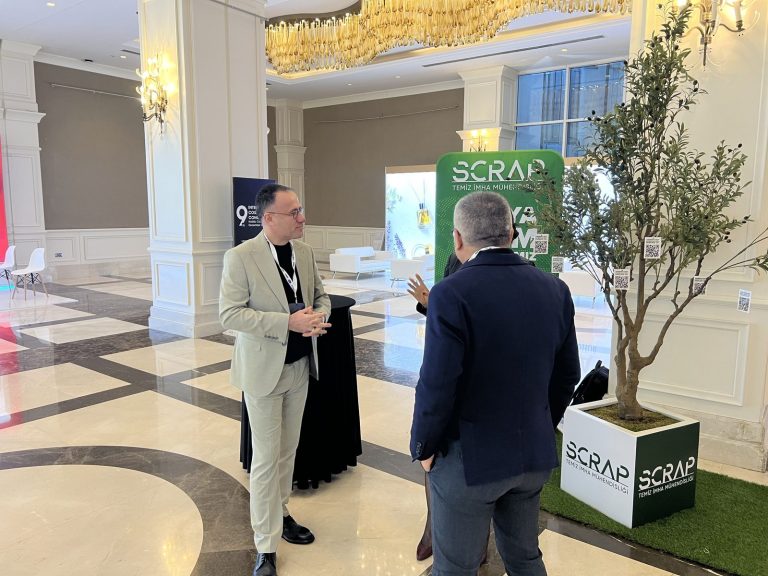


In short: At the 32nd Expomed Eurasia Fair, held in Istanbul on 24–26 April 2025, Scrap Danışmanlık called for a disposal implementation regulation. Today, each province handles the disposal of recalled, expired or damaged medicines and medical devices in its own way. A single implementing text would close that gap.
Who did we meet at the fair?
Throughout the fair, we met representatives of industry associations and officials from public institutions. A common picture emerged from these meetings. Most problems in disposal processes stem from unclear procedure. So our Chairman, Merdan Altınöz, shared the problems and our proposals with the heads of the associations in the Medical Device Industry Platform and with the medical device unit of the Istanbul Provincial Health Directorate.
Why is a disposal implementation regulation needed?
A product goes to disposal for many reasons. For example, a batch is recalled, a product expires or stock gets damaged in the warehouse. Quality defects lead to the same result. The recall regulation sets the rules for recalls. However, the disposal steps themselves, from application and inspection to counting and notification, do not run the same way in every province.
As a result, the same operation can follow one procedure in one province and another procedure elsewhere. Companies therefore cannot predict how long the process will take. Meanwhile, the goods wait in the warehouse, which adds both cost and risk.
What should the disposal implementation regulation cover?
We presented our proposal at the fair under four headings:
- Application and inspection deadlines: The rules should state how companies apply for recalled products and within how many days the inspection ends. This reduces the risk that delays create.
- Full count or sampling: Should officials count every unit, or should they sample? There should be one answer. Sampling saves time and money, but it must rest on a scientific method.
- Notification deadline: The rules should set how many days companies have to report the disposal result to the relevant directorate. This makes the process traceable and auditable.
- One national standard: Differences between provinces and institutions should disappear. A company should meet the same procedure wherever it operates.
Who gains from a clear procedure?
A disposal implementation regulation with a clear procedure makes the work easier for both sides. Companies manage the process faster and at lower cost. On the public side, standard records simplify inspection. In addition, a transparent process builds trust among stakeholders.
We propose that TİTCK, industry representatives and the relevant public institutions draft the text together. The regulation should also encourage digital tracking systems. Finally, a pilot should test the text before it applies nationwide.
What should companies do until then?
You do not need to wait for a disposal implementation regulation to run disposal safely and on record. To do so, plan the process from the start, keep complete reports and do not overlook the tax side. Our pharmaceutical disposal and medical device disposal pages explain these steps. We also shared the same topics a few weeks earlier at the 14th OHSAD Congress. If you want to plan your process with us, fill in our request form.
This story also appeared in Medikal News (in Turkish) on 30 April 2025.