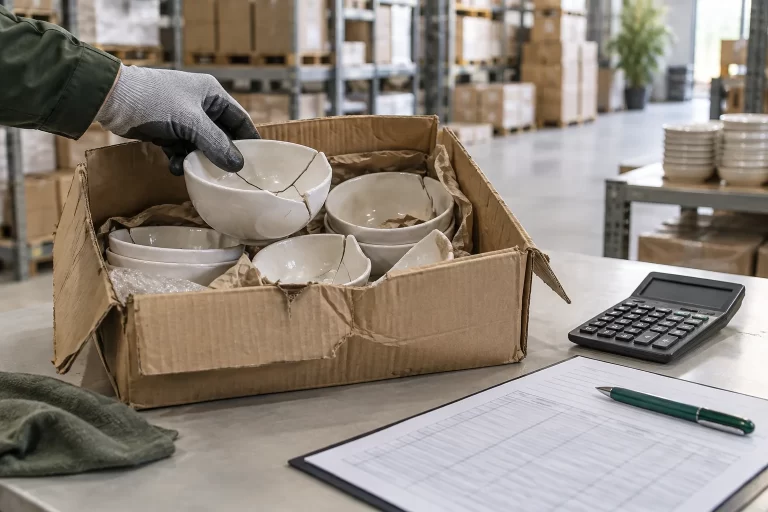



For companies, the disposal process for lost goods (zayi mal) does not merely mean physically eliminating products that have become unusable. It is also an official process that must be managed carefully in terms of accounting records, inventory management, internal audit, tax practices and corporate reporting. Especially for products that have spoiled, been damaged, passed their expiry date, fallen outside quality standards or lost their commercial value, serious operational and financial risks can arise if the correct recording is not applied.
Today, many organisations track their procurement, inventory, warehouse and shipment processes in detail. However, if the grounds on which lost goods are set aside, how they are recorded, which official records support them and how they are directed to disposal are not addressed systematically enough, the process can become fragmented. This can weaken corporate defensibility, particularly for finance directors, accounting teams and operations managers. This is because in lost goods processes, not only the loss of the product matters, but also how that loss is documented, which is at least as important as the product itself.
Why Does Risk Arise in the Lost Goods Process?
In lost goods processes, risk most often arises not from the product spoiling or becoming unusable, but from this situation not being managed properly within the corporate system. A product may physically no longer be usable; but if it is unclear at what stage this was identified, how it was classified, which units were involved in the process and how the records were kept, the process becomes open to loss of control.
For example, if a product damaged in the warehouse is merely removed from stock while the official records relating to it are incomplete, this can create a significant weakness. Similarly, when products that have passed their expiry date or failed quality control are set aside for disposal, inconsistencies may arise between the accounting records and the operational records. This in turn raises questions within the company, both financially and managerially.
Lost goods processes that proceed without control often create weaknesses in terms of audit, reporting and record integrity. For this reason, the process should be bound by clear rules from start to finish and should be addressed not only as physical disposal but also in terms of corporate record-keeping discipline.
Why Are Correct Recording and Official Records So Important?
In the lost goods disposal process, correct recording formally establishes why the product in the company’s possession can no longer be used economically or commercially. These records do not merely produce numerical data; they also carry the logic of the decision-making process, the condition of the product and the grounds for disposal into the corporate memory. Official records, in turn, are the formal and auditable documents of this structure.
When records and official records are lacking in a lost goods process, the following problems can arise:
- Inconsistency between inventory and accounting records
- Inability to show the grounds for disposal clearly
- Uncertainty over which units approved the process
- Weakening of internal audit and reporting processes
- Greater difficulty in defending the loss of the product at corporate level
For this reason, in lost goods processes, records and official records should not be seen merely as paperwork. On the contrary, they are the fundamental elements that form the formal basis of the process. The more clearly information such as the description of the product, its quantity, the reason for the loss, the date, the location, the relevant unit and the disposal method is written, the stronger the process becomes.
For finance and accounting teams in particular, the main point here is that goods that have physically disappeared should also be represented in the record system in a clear, consistent and traceable manner.
How Should the Lost Goods Disposal Process Be Managed within the Corporate Workflow?
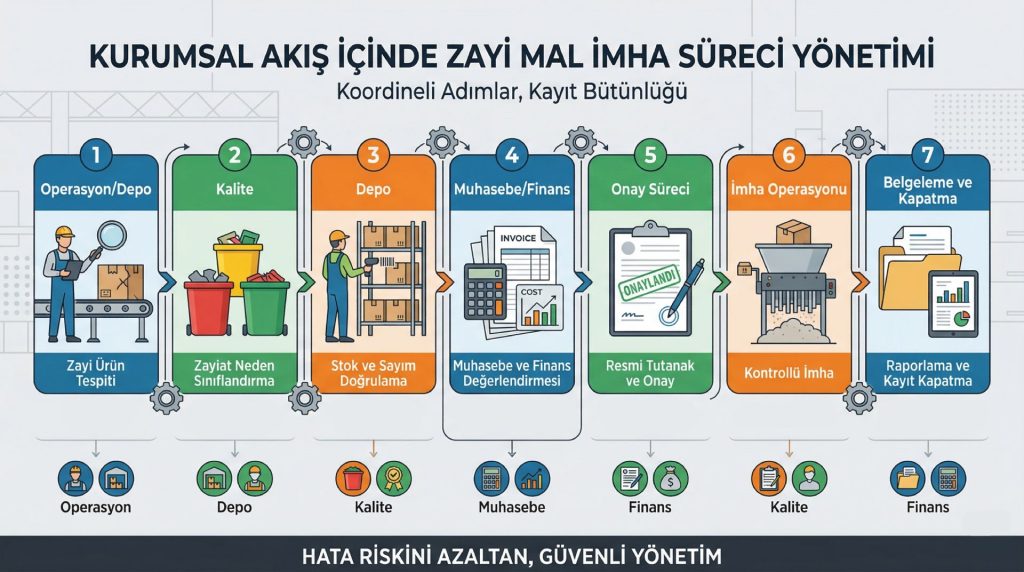
The lost goods disposal process is not a simple transaction that a single department can manage. For a sound structure, the operations, warehouse, quality, accounting and finance teams need to act in coordination. When the process moves through defined steps within the corporate workflow, both the risk of error is reduced and record integrity is strengthened.
In general, the process should be structured as follows:
- The relevant unit identifies that the product has become lost goods
- The reason for the loss is clearly classified
- Inventory and count information is verified
- The accounting and finance units assess the recording side
- The official records are prepared and the approval process is carried out
- The disposal operation is carried out in a planned manner
- The process is closed with documents, reports and records
Thanks to this structure, the physical loss of the product and its counterpart in the record system are integrated within the same workflow. In this way, the warehouse and accounting, operations and finance, and the physical process and the document system do not proceed in isolation from one another.
A clear corporate workflow becomes even more important in multi-location structures, in companies with high inventory volumes and in organisations subject to regular audits. This is because the more standardised the process is, the safer it becomes from a management perspective.
Why Is It a Critical Process for Finance, Accounting and Operations Teams?
The lost goods disposal process carries different but complementary responsibilities for finance directors, accounting teams and operations managers. While the operations side manages the physical condition of the product and the reality on the ground, the accounting side ensures that this is entered correctly into the record system. The finance side, in turn, assesses the impact of the process within the company’s overall financial structure and reporting framework.
For this reason, the process is regarded as critical in the following respects:
- For operations teams, it requires correct identification and correct segregation
- For accounting teams, it requires correct recording and document integrity
- For finance teams, it provides corporate defensibility and financial clarity
- For management, it improves internal control and reporting quality
- It strengthens a standard process culture across the company
Lost goods transactions that are not recorded or not supported by official records, in particular, can create areas within the organisation that are difficult to explain afterwards. A properly managed lost goods disposal process, on the other hand, takes product loss out of the realm of irregularity and turns it into a controlled corporate workflow.
This process is not merely a matter of emptying a warehouse or removing waste. It is also a management area that is critical in terms of record accuracy, process discipline and corporate reliability.
İmha Sürecinizi Planlayalım
Vergi avantajı takvimi ve imha süreciniz hakkında ücretsiz danışmanlık alın.