

In short: Branded product destruction aims to keep counterfeit, defective, and unsold stock off the market. A licensed facility carries out the work. As the destruction and recycling consultant, Scrap runs the process and records it; for counterfeit goods, it steps in after a court orders destruction. For clothing and footwear, see textile waste disposal.
When a branded product goes in the bin, the story does not end. Someone picks it up, repacks it, and sells it. The customer knows the product by your name and blames you when it fails. This article explains how branded product destruction works. First we separate the stock types. Then we show who watches the destruction and which documents you receive.
Why is branded product destruction different from dumping?
Branded product destruction closes the product’s trail with documents; the bin leaves no such record. Stock that goes to the bin or leaves uncontrolled can leak into the grey market. We explain how this risk starts in our market leakage article. Leaked goods damage trust in your brand. As a result, the damage can exceed the value of the stock.
There is a tax side too. If you cannot document the destruction, you may struggle to substantiate the write-off with the tax office. So two goals go together: the product becomes unrecognizable, and your file is ready for an audit. We cover how to protect your brand value during disposal in a separate article.
Are counterfeit, defective, and unsold stock destroyed the same way?
No. First the stock type is separated, because the type decides who makes the call. Defective and unsold stock is yours, so you decide as the brand. For seized counterfeit goods, the prosecutor may request destruction, and a court or judge decides. Once a court orders destruction, Scrap coordinates destruction and recycling. The licensed facility carries out the destruction. Do not have seized goods destroyed on your own decision. We cover the counterfeit side in our counterfeit cosmetics article.
| Stock type | Who decides? | What Scrap does | What is handed over to you |
|---|---|---|---|
| Defective product | Brand owner | Chooses the suitable licensed facility, files the official applications, and watches the destruction on site. | Destruction minutes, photos and video, Sustainable Transformation Report |
| Unsold stock | Brand owner | Plans the destruction and recycling route by product type. | Destruction minutes, photos and video, Sustainable Transformation Report |
| Returns and end-of-season stock | Brand owner | Watches the logo items become unrecognizable at the facility and the material go to recycling. | Minutes, photos, video, report |
| Seized counterfeit goods | Court or judge | Coordinates the process after the destruction order. The licensed facility carries out the destruction. | Destruction minutes, process records and Sustainable Transformation Report |
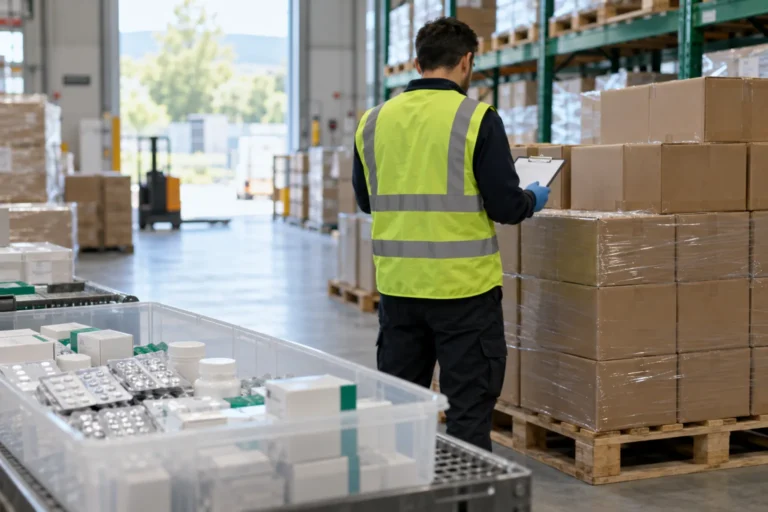
List each stock type on its own line. Then check the facility’s description and quantity against the product list and weighing record.
Who watches branded product destruction on site?
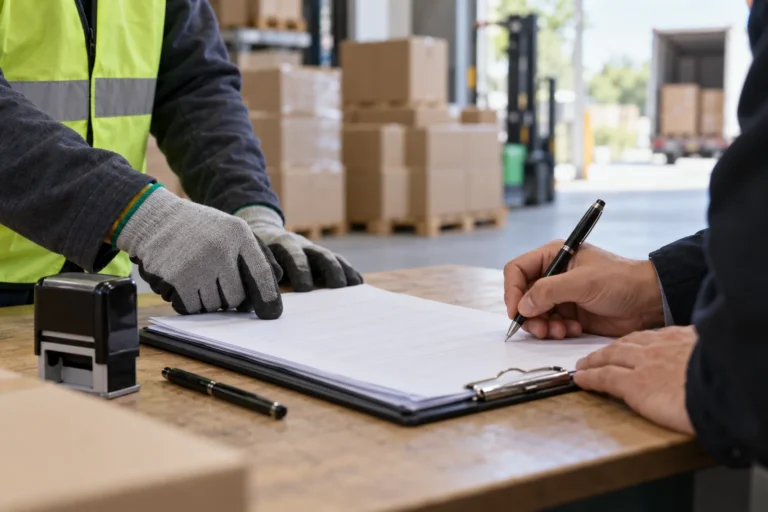
The Scrap team watches branded product destruction on site. We call this witnessed destruction: the work is done in front of our team and, where needed, a notary or an expert. So the answer to “was the product really destroyed?” is on record. Witnessed destruction runs like this:
- We book the destruction day with the facility and tell you.
- We secure the pallets with Scrap security tape and seal the loaded vehicle with a serial-numbered Scrap seal. The carrier takes it to the facility sealed.
- At the facility our team opens the seal and watches unloading.
- The facility processes the goods. Our team watches and records it on photo and video.
- The facility issues the minutes. We collect and check them, then hand them to you.
You follow the process in the Online Tracking System. It shows which step is complete and who did what in that step. Also, the photos, video, and minutes sit in the same place. You show the destruction to your management or auditor with these records. This helps most with high-value and logo-bearing batches.
In addition, under Service Providers, the Online Tracking System shows current facility and carrier permits and licences, the facility’s quality certificate and MoTAT (Mobile Waste Tracking System) number, and vehicle and driver records.
How does a product become unusable in destruction?
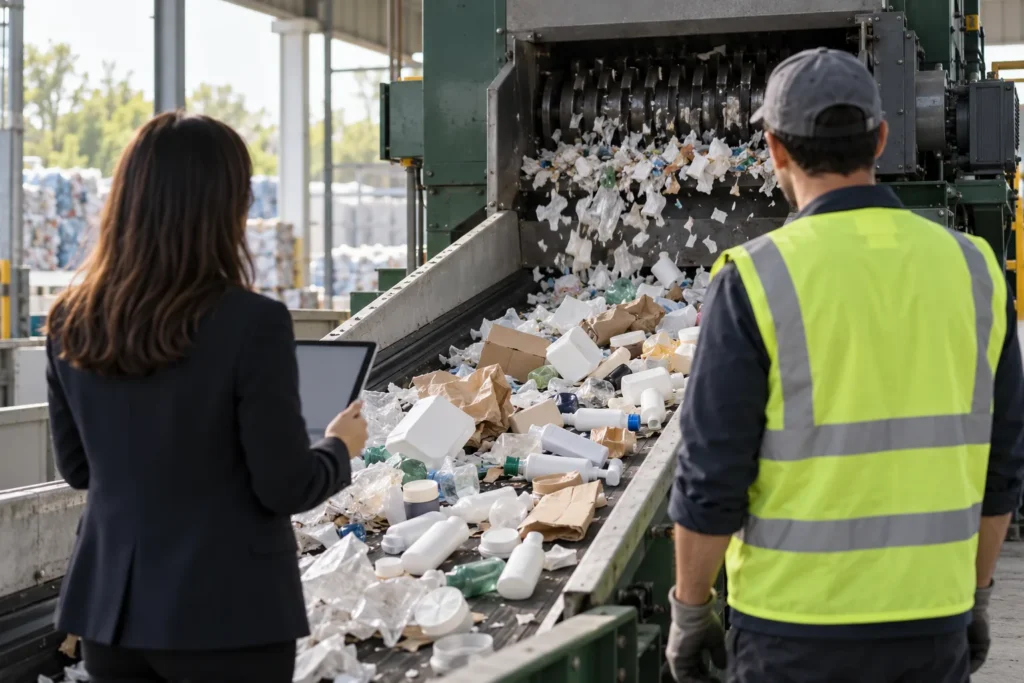
The licensed facility makes the product unrecognizable with a method that fits the material. Removing a label alone is not enough, because the design itself also identifies the product. The method depends on the product type:
- Textiles: The facility shreds branded and labeled goods. After that, the material goes to recycling by fiber content. Suitable material that cannot be recycled can go to energy recovery.
- Cosmetics: The facility checks whether the product is flammable or toxic and picks the method accordingly: neutralization, incineration, or chemical conversion. Glass, plastic, and cardboard packaging go to recovery. See our cosmetics disposal page.
- Packaging: The facility shreds logo-bearing and misprinted packaging, so the print can no longer be read. Then the material is separated and goes to recycling. See our packaging disposal page and our logo packaging article.
We plan at the quote stage which batch goes to which facility. Different product groups can go to different facilities. Then each group is a separate process. For this reason, each facility issues separate destruction minutes for its own work.
Where do you start with branded product destruction?
You start with a list. First, split your stock into three groups: defective, unsold, and seized. Add the product name, quantity, and batch details where you have them. Note if the goods sit in more than one warehouse. This list is the basis of the quote.
Then the decision is yours: you approve the quote. We run the rest. We file the necessary official applications. Where an official inspection is required, we book the facility after the inspection. We arrange the vehicle and watch the processing on site. The vehicle is licensed or unlicensed, depending on the waste type. The waste owner or an environmental engineer sets the waste code. You provide the list and the approval.
Before loading, Scrap sends the customer the product and disposal facility details. The customer issues the dispatch note, and Scrap follows up until it is ready.
Which documents do you receive after destruction?
You receive the destruction minutes the facility issues, the photo and video record, and the Sustainable Transformation Report. Scrap delivers this report for every process to describe the outcome. The minutes show the date, waste code and description, quantity in kilograms, dispatch note number and physical destruction statement. If an official determination was made, the notary minutes or the expert report join the file.
The valuation commission is the body that inspects goods and determines their arm’s-length value for tax purposes. On the tax side, we also file the valuation commission application and handle the tax office steps. This file is the record behind the stock you wrote off. You work out the tax result with your financial advisor. We explain the lost-or-impaired distinction in a separate article.
For the documents and who issues them, see the destruction minutes guide.
Are unsold clothes destroyed or recycled?
For unsold clothing, destruction and recycling are two stages of the same process; however, the options depend on the material and the legal rules that apply to the stock. The facility first shreds the product, so the logo and design become unrecognizable. Then the material goes to recycling by fiber content. Suitable material that cannot be recycled can go to energy recovery. The aim is to keep branded products from returning to the market.
The ban on destruction of unsold clothing and footwear listed in Annex VII began on 19 July 2026 for large economic operators active in the EU. Article 25 of Regulation (EU) 2024/1781 applies to medium-sized operators from 19 July 2030. Micro and small enterprises are exempt. Sending goods for recycling can also fall under the regulation’s definition of destruction. Assess the legal scope and any exceptions, such as intellectual property infringement, before planning how to handle the stock. See our EU destruction ban article for the scope.
What does Scrap do in branded product destruction?
Scrap is not a facility; it is the destruction and recycling consultant for branded product destruction. We take your product list and prepare the quote. Then we choose the suitable licensed facility and run the official applications and determination appointments. On destruction day our team is at the facility. After that, we hand you the minutes the facility issues, plus the photo and video record. That leaves branded product destruction as a closed job in your file.
If your list is ready, fill out the request form.
Frequently asked questions
What is branded product destruction?
Branded product destruction and recycling aims to keep goods from returning to the market. A licensed facility processes the products, while Scrap observes the work and delivers the records.
Who watches branded product destruction on site?
The Scrap team does. At the facility, the team opens the seal, watches unloading and processing and records the work in photos and video. You can follow the process in the Online Tracking System.
Can I have counterfeit goods destroyed myself?
A prosecutor may request destruction of seized counterfeit goods, and the competent judge or court decides. After the court orders destruction, Scrap coordinates the process and a licensed facility performs the work.
Why is it risky to throw defective products in the bin?
Goods in the bin can be collected, repacked, and sold. Customers know the product by your name and blame your brand when it fails. If you cannot document the destruction, you may struggle to substantiate the write-off with the tax office.
Which documents do I get for branded product destruction?
You receive the facility's destruction minutes, the photo and video record, and the Sustainable Transformation Report. The documents are also archived in the Online Tracking System.
Is unsold stock destroyed or recycled?
The method depends on the material, stock status and applicable law. For stock that may fall under the EU ban, first assess its scope and exemptions. Sending goods for recycling can also count as destruction under the regulation.
Sources
- Industrial Property Law No. 6769 (Official Gazette, 10 January 2017, No. 29944), Articles 149 and 163
- Regulation (EU) 2024/1781 (Ecodesign for Sustainable Products Regulation), Article 25
- Communiqué on the Carriage of Waste by Road (Official Gazette, 20 March 2015, No. 29301), Articles 2 and 5
This article reflects the legislation in force on its publication date and is for general information. In counterfeiting cases consult your trademark attorney, and on tax outcomes your financial advisor.
İmha Sürecinizi Planlayalım
Vergi avantajı takvimi ve imha süreciniz hakkında ücretsiz danışmanlık alın.