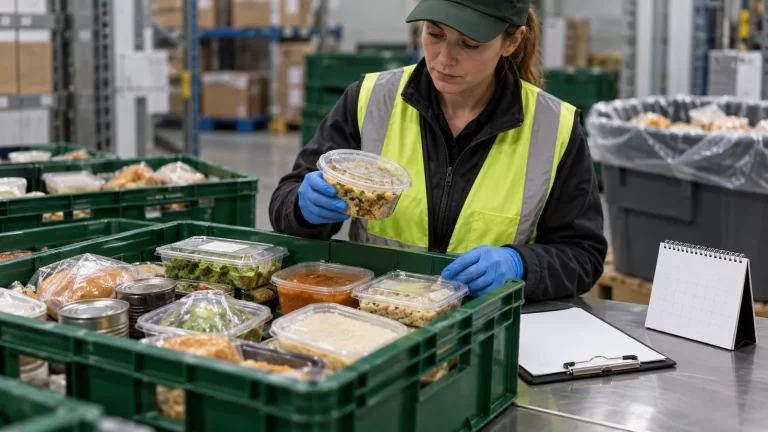


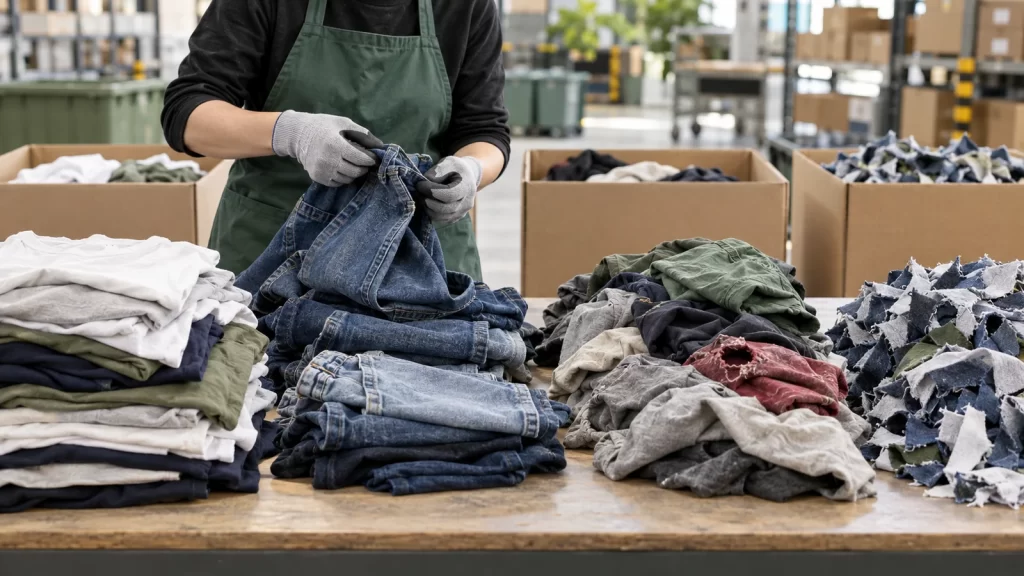
In short: Unsold clothes follow one of four routes: discounted resale, donation, recycling, or documented disposal. However, the right route depends on the condition of the goods and the risk to your brand. Whichever route you pick, you must keep the goods under control and document every step.
The season ends and the shop windows change. In the warehouse, last year’s collection waits. Returned T-shirts, trousers with broken size runs, and batches with faulty stitching sit on the same shelf. Moreover, each one costs you warehouse rent and tied-up capital. So what happens to unsold clothes? This article explains the options and the right order.
Why do unsold clothes pile up?
Surplus stock never comes from a single cause. In practice, five sources stand out:
- End-of-season stock: Goods that nobody wants once the collection changes.
- Returns: Garments that customers tried on, wore, or stripped of their labels.
- Faulty batches: For example, goods with a stitching, color, or size defect.
- Cancelled orders: Also, batches the buyer rejected or never collected.
- Samples and display items: Pieces you used at trade fairs, photo shoots, and shop windows.
What are the four routes for unsold clothes?
Yet no single route fits every stock. So you first group the goods by condition. Then you pick the route that suits each group.
- Discounted resale: This suits sound goods that will not hurt your brand. However, you must choose the sales channel yourself. In particular, uncontrolled bulk sales can push the goods into other markets under your brand name.
- Donation: Clean and sound clothes can reach people in need. However, you should get a written promise from the receiving organization that it will not sell the goods. Otherwise the goods return to the market anyway, and the donation becomes a brand risk.
- Recycling: Garments that nobody can wear again give back their fiber or raw material. Especially zips, buttons, and prints make this harder. For this reason, the facility first separates these parts.
- Documented disposal: This suits faulty goods, unsafe goods, and goods with a high brand risk. Thus a licensed facility makes the goods unusable and issues a record.
In addition, the Waste Management Regulation backs this logic. Its general principles list reuse, recycling, and other recovery operations first for waste that cannot be avoided. In other words, energy use and disposal come after them. You can read the rules on our Waste Management Regulation page.
How do you protect your brand with unsold clothes?
A garment you give away as scrap often does not stay there. For example, someone collects it and sells it on the secondhand market. The customer knows the product by your brand. When it fails, the customer blames you. We explained the same risk in our article on protecting brand value during disposal.
Four rules protect your brand:
- First, do not mix faulty or unsafe goods into sales or donations.
- On garments with a logo or print, do not stop at cutting off the label. The design itself also identifies the product.
- Also, get a written promise from the buyer or the organization that they will not resell the goods.
- Finally, count the goods that go to disposal, seal them, and record the handover.
Which waste rules apply to recycling and disposal?
A garment falls under the Waste Management Regulation the moment it becomes waste. The regulation gives the waste producer four duties:
- First, collect the waste separately and store it temporarily.
- Then keep records of the waste you produce, and pack and label it properly.
- Next, send the waste to a facility that holds a permit or an environmental license.
- Finally, fill in the previous year’s waste declaration form online by the end of March each year, and keep a copy for five years.
In addition, the regulation asks you to keep your records for at least five years. So put the delivery document you receive from the facility in your file.
What should you do on the tax side?
Unsold clothes still sit on your balance sheet at cost. To write that value off, you must follow the route in the tax legislation. Article 278 of the Tax Procedure Law lets you value goods at their equivalent value when they lose much of their value through spoilage, rot, breakage, and similar events. The law sets an order for finding that value. First, you look at the average sales price. Then you work it out from the cost. If those fail, the valuation commission steps in and checks the cost and the market value (Article 267). So attach records of the damage or defect to your application.
Article 278/A opens a separate route for goods that must be destroyed because of spoilage, rot, or the passing of an expiry date. Which route fits your goods depends on their condition. Moreover, the VAT side is a separate calculation. We explained this distinction with an example in our article on lost goods versus impaired goods.
How do you manage unsold clothes step by step?
- Inventory and grouping: First, you list the stock by model, quantity, and condition. That way, you write sound, faulty, and unsafe goods on separate lines.
- Route choice: Then you assign each group to resale, donation, recycling, or disposal.
- Brand check: In particular, you assess the label, logo, and print risk for each group.
- Sealed transport: You send the goods to a licensed facility with a count record, in a sealed vehicle, so nothing goes missing.
- Documentation: Finally, you put the disposal or recycling record, the delivery document, and the photos in your file.
These five steps put your brand, your accounting entry, and your environmental duty in the same file. Scrap runs this process with its textile waste disposal service; you can find the details on that page.
Frequently asked questions
Which regulation applies to clothes that become waste?
The Waste Management Regulation. It requires the waste producer to collect waste separately, keep records, and send the waste to a facility with a permit or an environmental license. It also requires an annual waste declaration.
Is donation better than disposal?
If the goods are sound and clean, donation comes closest to reuse. However, unless you get a written promise that the goods will not be sold, they return to the market anyway. Do not donate faulty or unsafe goods.
Can I expense the cost of unsold clothes?
Yes, with the right documents, but the goods' condition decides the route. For example, Tax Procedure Law Article 278 opens the equivalent-value route for impaired goods. For goods that must be destroyed, however, Article 278/A opens a separate route. VAT is a separate calculation, so consult your accountant.
When do I fill in the waste declaration form?
The regulation requires you to fill in the form, with the previous year's data, online by the end of March each year. You must keep a copy for five years.
Sources
- Waste Management Regulation (Official Gazette, April 2, 2015, No. 29314), Articles 5, 9, and 15
- Tax Procedure Law No. 213, Articles 278 and 278/A
This article follows the legislation in force on its publication date. It is for general information and does not replace tax advice. Therefore, get your accountant’s opinion before you act. If you want to plan the process for your stock together with us, you can fill in our request form.
İmha Sürecinizi Planlayalım
Vergi avantajı takvimi ve imha süreciniz hakkında ücretsiz danışmanlık alın.