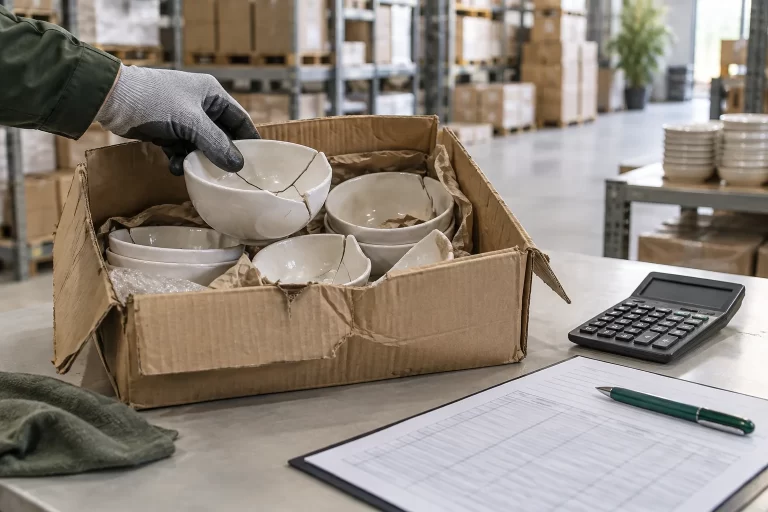


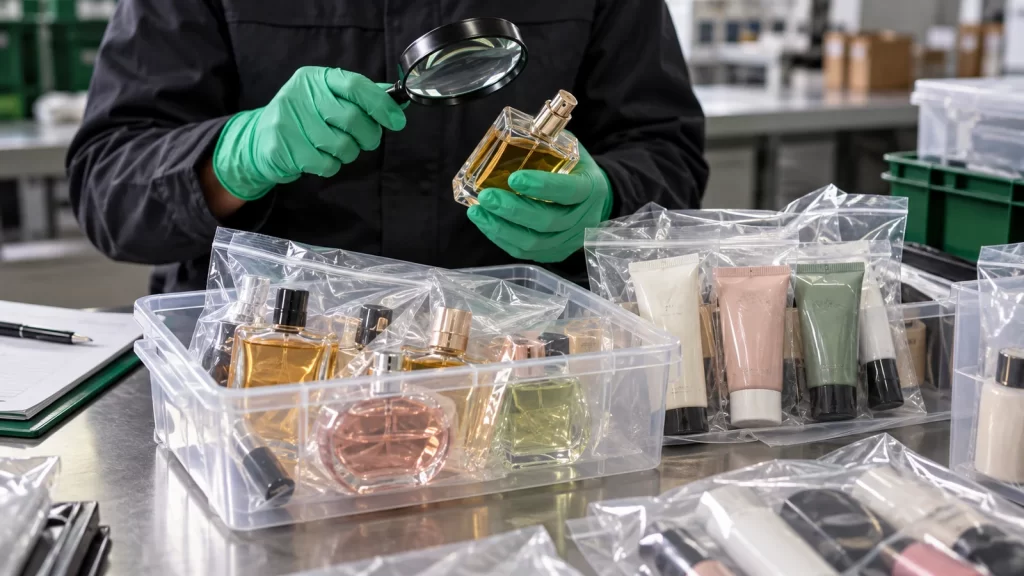
In short: Counterfeit cosmetics disposal is the registered removal of a fake product that infringes a trademark. Under the Industrial Property Law, the trademark owner can ask a court to seize and destroy such goods. In addition, a fast destruction procedure applies to large quantities that the authorities seize in a criminal investigation. In that procedure, a judge or a court decides on destruction. The trademark owner, in turn, files the complaint, gathers the evidence, and follows the process.
Hundreds of fake creams that carry your brand’s label turn up in a warehouse. The products look like the real thing, but nobody knows what is inside. So who decides on their destruction, and what do you do? This article explains the path of a trademark owner in counterfeit cosmetics disposal.
When do fake cosmetics infringe a trademark?
The Industrial Property Law lists the acts that infringe a trademark one by one (Article 29). For example, using the mark without the owner’s consent is one of them. In addition, imitating the mark with the mark itself, or with a sign that looks identical to it, is another.
Moreover, the person at the end of the chain can be liable too. Someone who knows, or should know, that the goods copy the mark infringes it by selling, distributing, or holding them for commercial purposes. Importing or exporting them has the same result (Article 29).
The law also treats these acts as crimes. A person who infringes another’s trademark by imitation, and who produces, sells, imports, holds, or stores goods, faces imprisonment and a judicial fine (Article 30). However, two conditions matter. The mark must carry a registration in Türkiye for a court to impose a penalty. In addition, an investigation and a prosecution depend on a complaint (Article 30).
Who decides on counterfeit cosmetics disposal?
First, look at the civil route. A trademark owner can use two paths to counterfeit cosmetics disposal:
- Civil action: An owner whose right the infringer violated can ask the court to seize the infringing goods. The owner can also ask, at the infringer’s expense, to change the form of the goods, to wipe the marks off them, or to destroy them when that is unavoidable to stop the infringement (Article 149).
- Injunction: A person with the right to sue can ask for an injunction by proving the infringement. The injunction covers the seizure and safekeeping of the infringing goods wherever they are. Customs areas, free ports, and free zones fall within this scope (Article 159).
On the criminal route, the authorities can seize the goods that the offense involves. In the fast destruction procedure, a judge or a court decides on destruction. So do not destroy seized goods on your own decision.
How does the fast destruction procedure work in counterfeit cosmetics disposal?
Sometimes the seized goods do not fit into the evidence office. So the law sets a fast destruction procedure for counterfeit cosmetics disposal (Article 163):
- Samples: First, the authorities take enough samples on the prosecutor’s instruction. Then a record with details such as quantity, kind, and size goes to the prosecutor’s office.
- Safekeeping: The rest of the goods go to the local tax office.
- Expert: If the goods risk damage or loss of value, or if keeping them is a serious burden, an expert examines them.
- Decision: In an investigation, the judge decides on destruction at the prosecutor’s request. In a prosecution, the court decides.
- Destruction: Finally, a three-person committee that the tax office sets up under the prosecutor destroys the goods and writes minutes.
These steps belong to the authorities. Therefore, in counterfeit cosmetics disposal you do not run the destruction yourself.
What does a trademark owner do in counterfeit cosmetics disposal?
In counterfeit cosmetics disposal, your role is coordination more than law. The order below is the practical layout that we recommend:
- Confirm the registration: First, you document that your mark carries a registration in Türkiye, because a penalty depends on it.
- File a complaint: Then you complain to the competent authority, because the investigation depends on a complaint.
- Gather the evidence: For example, you record the point of sale, the photos, and the batch and label details.
- Ask for an injunction: If needed, you ask the court for an injunction.
- Follow the process: You track the seizure and destruction decisions and keep the records in your file.
- Keep your own stock apart: You dispose of your own faulty or aging products through documented disposal, as a separate matter.
We explained the leakage risk for your own stock in our article on protecting brand value during disposal. For the health side of fake products, see our news item on counterfeit cosmetics and cancer risk.
When does TİTCK step in for counterfeit cosmetics?
Trademark law is one path, and product safety is another. So for counterfeit cosmetics, TİTCK follows its own route. If the product does not comply with the Cosmetic Products Regulation, or poses a serious risk to human health, the Turkish Medicines and Medical Devices Agency (TİTCK) steps in too. The Agency asks distributors for withdrawal, recall, or destruction (Article 29). If the product poses a serious risk that needs urgent action, or if the operator fails to act in time, the Agency bans, withdraws, or recalls the product. If the Agency cannot make the product safe, it destroys it in part or in full, and the economic operator pays the costs (Article 31).
So the product safety side runs separately. We covered the other side in our article on expired cosmetics disposal. In its cosmetics waste disposal service, Scrap carries out collection, counting, disposal, and documentation for your own stock. The courts and the prosecutor’s office carry out the official destruction of counterfeit goods.
Frequently asked questions
Must I file a complaint about counterfeit cosmetics?
An investigation and a prosecution for trademark infringement crimes depend on a complaint (Article 30). So once you learn of the offense, complain to the competent authority and keep the evidence.
What if my trademark is not registered in Türkiye?
A court can impose a penalty only if the mark is registered in Türkiye (Article 30). Assess the route for an unregistered mark together with your trademark attorney.
When does the fast destruction procedure apply?
It applies when seized goods cannot be kept in the evidence office because of their number, size, or nature. The prosecutor has samples taken, the goods go to the tax office, and a judge or a court decides on destruction (Article 163).
Can I destroy seized fake goods myself?
No, do not destroy them on your own decision. In the fast procedure, the decision comes from a judge or a court, and the destruction takes place before a three-person committee under the prosecutor (Article 163).
Sources
- Industrial Property Law No. 6769 (Official Gazette, January 10, 2017, No. 29944), Articles 29, 30, 149, 159, and 163
- Cosmetic Products Regulation (Official Gazette, May 8, 2023, No. 32184 bis), Articles 29 and 31
This article follows the legislation in force on its publication date. It is for general information and does not replace legal advice. Therefore, get the opinion of your trademark attorney and your legal counsel in a real counterfeiting case. If you want to plan the process for your own stock together with us, you can fill in our request form.
İmha Sürecinizi Planlayalım
Vergi avantajı takvimi ve imha süreciniz hakkında ücretsiz danışmanlık alın.