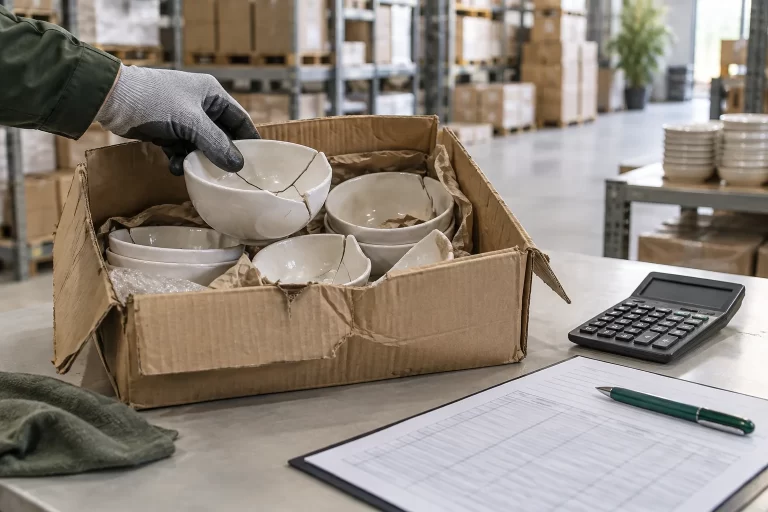


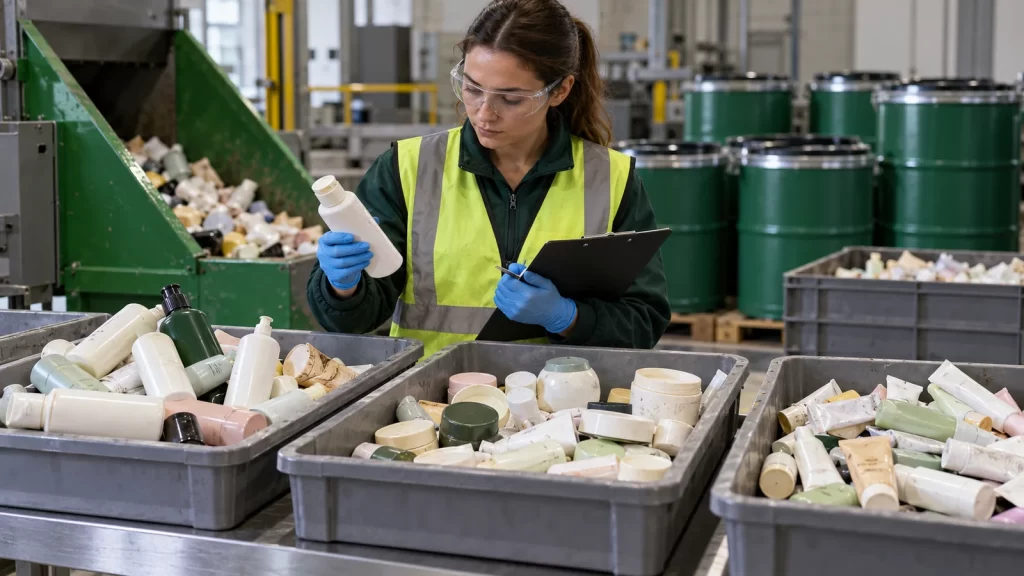
In short: Cosmetics disposal is the way to remove products that have passed their expiry date or fallen out of quality, in a registered and documented manner. The Cosmetic Products Regulation requires a distributor to check, before it makes a product available, that the minimum durability date has not passed. So you separate expired products from sales stock, deliver them to a licensed facility, and document every step of cosmetics disposal.
Expired shampoos, moisturizers, and perfumes wait in the warehouse. Left-over campaign sets and return boxes sit on the same shelf. Throwing them away quietly looks easy. Yet each one carries your brand name. Moreover, cosmetics disposal is not an ordinary waste job. So how does it work? This article explains the rules and the right order.
What does the expiry date mean for cosmetics?
The Cosmetic Products Regulation uses the term “minimum durability date”. Knowing this term is the first step of cosmetics disposal. This is the date until which the product, stored under appropriate conditions, keeps fulfilling its original function and stays safe (Article 22(1)(c)). The packaging shows it with the words “best used before” or with a symbol.
There is one exception. A date is not mandatory for products with a minimum durability of more than thirty months. For these products, the packaging instead shows how long the product stays safe after opening, in months or years. A distributor, in turn, checks that the minimum durability date has not passed before it makes the product available (Article 9(2)(c)). So keeping an expired product in sales stock makes no sense.
Which products does cosmetics disposal cover?
Stock for disposal never comes from a single cause. In practice, four groups stand out:
- Expired products: Creams, shampoos, make-up, and perfumes past their minimum durability date.
- Damaged products: Goods from crushed, leaking, or broken boxes.
- Returns and testers: Opened, tried, or displayed products.
- Campaign and old-design stock: Sets that are no longer on sale and batches in old packaging.
Products that you recall for safety reasons need a separate process. In that process, the Turkish Medicines and Medical Devices Agency also gets involved.
Why should expired cosmetics never go in the trash?
A product that you throw away or give to a scrap dealer often does not stay there. Someone collects it, repacks it, and sells it. The customer knows the product by your brand. When trouble comes, the customer blames you. The health effect of counterfeit cosmetics also became a news story of its own: The Cancer Risk of Counterfeit Cosmetics. We also explained how uncontrolled disposal opens this door in our article on protecting brand value during disposal.
There is a safety side too. Perfumes that contain alcohol and products in pressurized cans can be flammable. For this reason, you should keep them apart from other goods in storage and transport.
Which waste rules govern cosmetics disposal?
Once an expired product becomes waste, the Waste Management Regulation applies. So in cosmetics disposal, the regulation gives the waste producer these duties (Article 9(1)):
- Collect the waste separately and store it temporarily.
- Keep records of the waste you produce, and pack and label it properly.
- Send the waste to a facility that holds a permit or an environmental license.
- Fill in the previous year’s waste declaration form online by the end of March each year, and keep a copy for five years.
Temporary storage has limits as well. Hazardous waste can stay in the storage area for six months at most, and non-hazardous waste for one year at most (Article 13(3)). The waste carries its waste code, quantity, and storage date (Article 13(2)). You set the code under the regulation’s code rules (Article 12(1)). If you separate the product groups from the start, this job gets easier. You can read all the rules on our Waste Management Regulation page.
What is the tax side of disposed cosmetics stock?
Article 278/A of the Tax Procedure Law covers goods that must be destroyed because of spoilage, rot, or the passing of an expiry date. For taxpayers with recurring disposals who apply, the article treats the equivalent value of the destroyed goods as zero, up to the destruction rate agreed with the Ministry of Finance. In addition, the taxpayer keeps every record and document on the disposal and presents them when needed.
The VAT side is a separate calculation. That is because the answer changes depending on whether the goods lost value (impaired goods) or disappeared completely (lost goods). We explained this distinction with an example in our article on lost goods versus impaired goods.
How does cosmetics disposal work step by step?
- Inventory and separation: First, you list the stock by the batch or serial number on the label (Article 22(1)(d)). You write pressurized cans and alcohol-based products on separate lines.
- Inspection and record: Then you count and photograph the goods. The record names the product, the batch, the quantity, and the reason for disposal.
- Sealed transport: The goods leave the warehouse in a sealed vehicle. That way, nothing can go missing on the road.
- Disposal at a licensed facility: The facility makes the goods unusable. It also separates the glass, plastic, and cardboard and sends them to recovery.
- Documentation: Finally, you put the disposal record, the delivery document, and the photo records in your file.
These five steps put your brand, your accounting entry, and your environmental duty in the same file. In short, cosmetics disposal closes in a single record. Scrap runs this process with its cosmetics waste disposal service; you can find the details on that page.
Frequently asked questions
Can I sell expired cosmetics at a discount?
No. The regulation requires a distributor to check, before it makes a product available, that the minimum durability date has not passed (Article 9(2)(c)). So separate the expired product from sales stock.
Why does the batch number matter in disposal?
The label carries a batch or serial number (Article 22(1)(d)). This number matches the product you destroy to your records. Moreover, if the Agency asks, the responsible person shows to which distributors it supplied the product for three years (Article 10).
How long can I hold cosmetics waste?
Under the Waste Management Regulation, non-hazardous waste can stay in temporary storage for one year at most, and hazardous waste for six months at most (Article 13(3)). The waste code decides which group a product falls into.
Can I expense the cost without a disposal record?
It would be hard. Tax Procedure Law Article 278/A requires you to keep every record and document on the disposal and present them when needed. Also consult your accountant for the tax result.
Sources
- Cosmetic Products Regulation (Official Gazette, May 8, 2023, No. 32184 bis), Articles 9, 10, and 22
- Waste Management Regulation (Official Gazette, April 2, 2015, No. 29314), Articles 9, 12, 13, and 15
- Tax Procedure Law No. 213, Article 278/A
This article follows the legislation in force on its publication date. It is for general information and does not replace tax advice. Therefore, get your accountant’s opinion before you act. If you want to plan the process for your stock together with us, you can fill in our request form.
İmha Sürecinizi Planlayalım
Vergi avantajı takvimi ve imha süreciniz hakkında ücretsiz danışmanlık alın.