

In short: E-waste is the short name for electrical and electronic equipment that has reached the end of its life. In Türkiye, the Regulation on the Management of Waste Electrical and Electronic Equipment (WEEE, AEEE in Turkish) has governed it since February 1, 2023. The regulation also treats a company that uses the equipment as a “consumer”. Therefore, you must collect e-waste separately and hand it to a registered collection system.
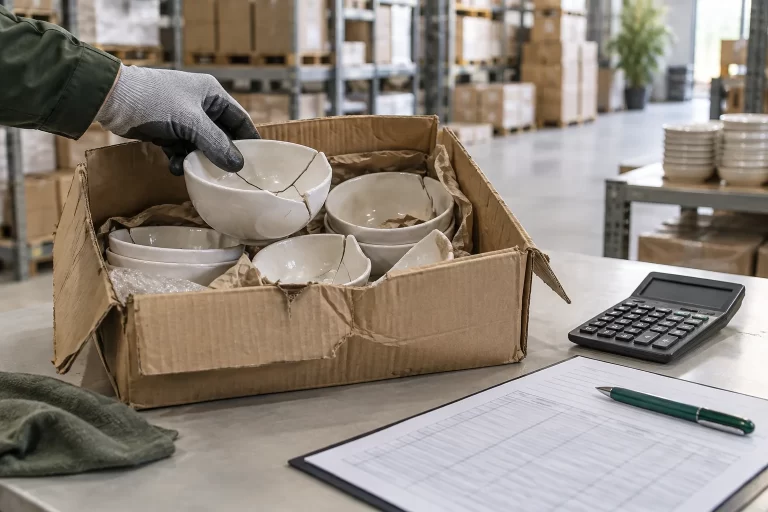
Almost every business has the same pile in a corner. Broken printers, monitors with cracked screens, old computer cases, and a box full of chargers. Most of the time, nobody wants to own that pile. Yet the law already named the owner. This guide explains e-waste and your business’s responsibility in plain language.
What is e-waste?
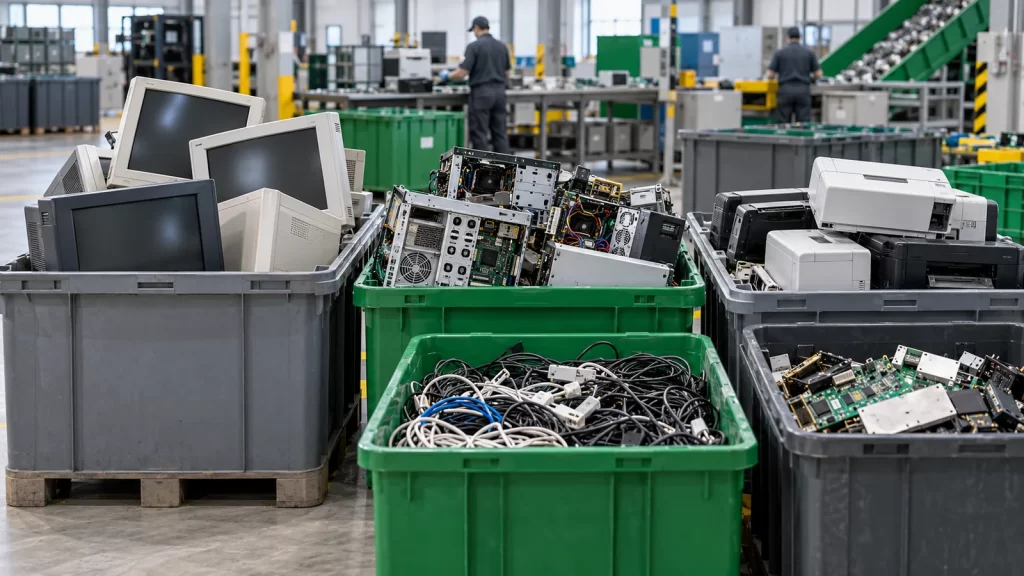
E-waste is any electrical or electronic equipment that has reached the end of its life or that its owner treats as waste. Its official name is waste electrical and electronic equipment, which the regulation shortens to WEEE. Moreover, the definition does not stop at the device body. In other words, parts such as cables, circuit boards, and batteries fall under the definition together with the device. You can find the details of the abbreviation in our WEEE glossary entry.
The scope is also wider than people think. For example, refrigerators and air conditioners, screens and monitors, lamps, white goods, small household appliances, and IT devices such as phones all fall into this group. Since January 1, 2024, the regulation has handled these products in six categories.
Why is e-waste not ordinary trash?
Because the same device holds both poison and treasure. Circuit boards and screens can contain heavy metals such as lead, mercury, and cadmium. At a landfill, these substances leak into soil and water. On the other hand, the same boards also contain precious metals such as gold and copper. The right facility separates these metals and returns them to industry as raw material.
The numbers show the size of the problem. According to the United Nations’ Global E-waste Monitor, the world produced 62 million tons of e-waste in 2022. However, countries collected and recycled only 22.3 percent of that amount with documentation. Moreover, the report expects the annual amount to reach 82 million tons in 2030.
Who does the WEEE Regulation bind?
The Regulation on the Management of Waste Electrical and Electronic Equipment appeared in Official Gazette No. 32055 on December 26, 2022. It took effect on February 1, 2023 and replaced the old 2012 regulation. The text gives duties to three parties:
- Producer: The company that makes the device under its own brand or imports it.
- Distributor: The store or website that sells the device.
- Consumer: Anyone who uses the device.
The subtle point hides in the third line. The regulation defines the consumer as “a natural or legal person who uses EEE”. Therefore, a company that uses computers in its office is a consumer. In the same way, a logistics firm that uses handheld terminals in its warehouse falls under this definition.
What are your business’s e-waste obligations?
Article 11 of the regulation groups the consumer’s duties under four headings:
- Choose long-lasting, energy-efficient, and repairable devices. In addition, consider the reuse option for a used device.
- Collect e-waste separately from other waste.
- Hand e-waste to the municipality’s collection point, a waste delivery center, the seller’s or producer’s collection system, or a WEEE treatment facility.
- Do not give e-waste to an unregistered collector.
The last rule is simple on paper and hard in practice. That is because a scrap dealer who comes to your door takes the device right away and even pays you. However, you cannot document what happens to the device afterward. In addition, the regulation requires that only facilities with an environmental permit and license process e-waste. In short, asking for the document of the place you hand it to protects you.
Can you return old equipment to the seller?
Yes. When you buy a new product, the seller must take back your old device of the same type and function. Brand and model do not matter. Moreover, the seller cannot charge you a shipping fee for it. If delivery does not happen at the same time, you can hand over the old device within 30 days after the sale date.
In addition, small devices have a second route. Stores with a sales area of at least 400 square meters keep a purple collection box for e-waste smaller than 25 centimeters. You can drop waste in this box without shopping.
Who pays for e-waste costs?
Most corporate users never ask this question. Yet the answer affects your budget. The regulation puts the main cost burden on the producer. The rule is clear if the product reached the market after May 22, 2012. For example, for devices you use both at home and at work, such as computers, the producer finances collection and treatment. In the same way, for devices suitable only for professional use, that is, “non-household WEEE”, the producer covers the cost of collection, transport, treatment, and disposal.
For older professional devices, however, the rule changes. If you replace an old device with a new one, the producer of the new product or you pay, depending on your agreement. In other cases, the cost stays with you. In addition, the parties can make a different financing agreement as long as it does not conflict with the regulation. That is why it is wise to write this topic into the purchase contract when you renew devices in bulk.
What is the e-waste collection target, and what happens if you ignore the rules?
The regulation sets a national collection target: 40 percent for 2025. The target rises five points each year and reaches 65 percent in 2030. In other words, the share of registered collection must grow every year.
For those who ignore the rules, the regulation refers to Environmental Law No. 2872. The law provides administrative fines. However, the amounts change every year, so check the current figure in the official communiqué.
What should your file contain when you hand over e-waste?
Meeting the obligation is not enough. You must also be able to prove it. Therefore, keep these documents for every delivery:
- a device list: type, quantity, and the asset or serial number if there is one,
- the environmental permit and license of the receiving facility,
- the delivery record and weighing slip,
- a data destruction record for devices that carry data.
This file does two jobs. First, it proves during an inspection that you met your obligation. Second, it gives your accounting team a basis when you remove the asset from the books. If you hold a stock of unsold or faulty products, the process works differently. In that case, you can look at our electronic device waste disposal page.
Frequently asked questions
Can you throw e-waste in the trash?
No. The WEEE Regulation requires you to collect e-waste separately from other waste. In addition, you must hand it to the collection system of the municipality, the distributor, or the producer, or to a licensed facility.
Does the WEEE Regulation treat companies as consumers?
Yes. The regulation defines a consumer as any natural or legal person that uses electrical and electronic equipment. Therefore, every company that uses devices carries the consumer's duties.
Can I give old devices to a scrap dealer?
Not if the collector is unregistered. The regulation bans you from handing e-waste to unregistered collectors. So ask for the environmental permit and license of the place you deliver to.
Does the seller have to take back my old device?
Yes. When you buy a new product, the seller takes back your old device of the same type at no extra charge. If delivery does not happen at the same time, you can hand it over within 30 days of the sale.
Sources
- Regulation on the Management of Waste Electrical and Electronic Equipment (Official Gazette, December 26, 2022, No. 32055), Articles 4, 5, 10, 11, 20, 22, 23, and 29
- Environmental Law No. 2872
- Global E-waste Monitor 2024 (UNITAR and ITU)
This article follows the legislation in force on its publication date. It is for general information and does not replace legal advice. If you want to build the e-waste process at your organization together with us, you can fill in our request form.
İmha Sürecinizi Planlayalım
Vergi avantajı takvimi ve imha süreciniz hakkında ücretsiz danışmanlık alın.