

In short: Electronics disposal is the way to remove stock with aging technology, quality problems, or damage in a registered and documented manner. Holding this stock in a warehouse carries risk, and so does selling it cheap. The right order is this: first you have the value officially determined, then you deliver the product to a licensed facility and document every step.
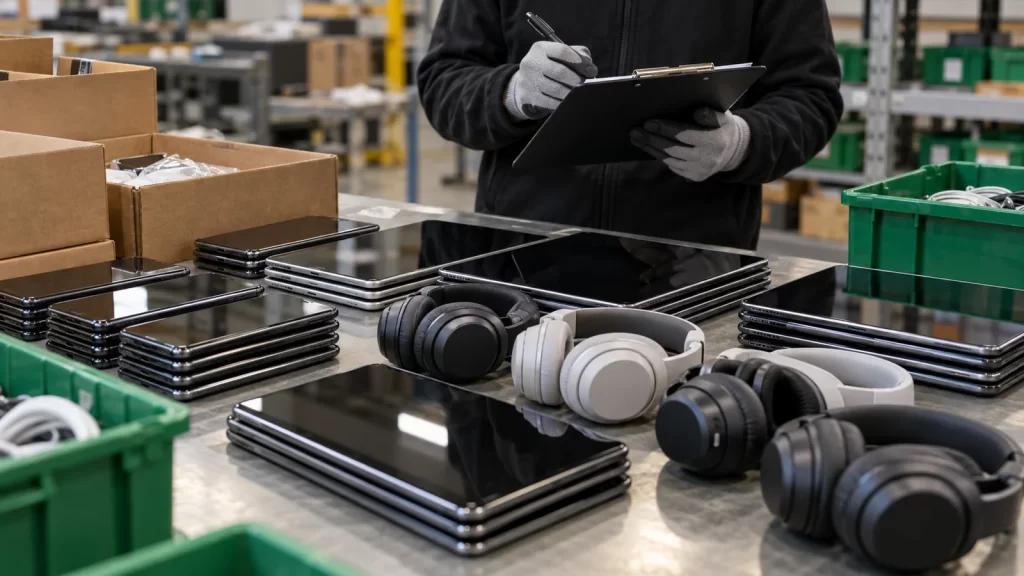
Last year’s popular phone now takes up shelf space. Returned headphones, tablets with scratched screens, and smartwatches that get no updates wait in the same warehouse. On your balance sheet, these products still have a value. Yet nobody on the market wants them. So what should you do with this stock? This article explains the options and the right order of electronics disposal.
Which products fall under electronics disposal?
Unsold electronic stock does not come from a single cause. In practice, five groups stand out:
- Products with aging technology: Phones, tablets, and accessories that nobody wants once a new model arrives.
- Batches with quality problems: Devices with a production defect or devices that fail testing.
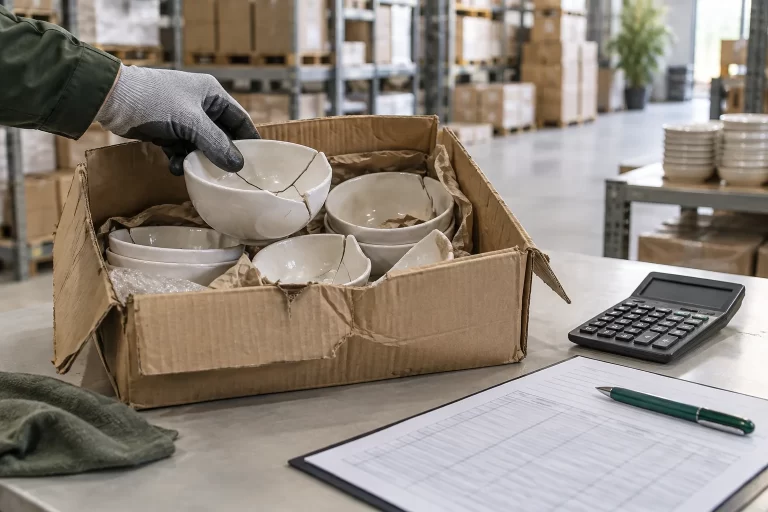
- Damaged products: Boxes that got crushed in transport, took in water in the warehouse, or fell.
- Returns and display devices: Products with an opened box, used products, or products shown in a store.
- Products you recall: Devices you pull from the market because of a safety risk.
The last group needs special attention. That is because Law No. 7223 on Product Safety and Technical Regulations does not let you leave an unsafe product on the market. Therefore, you must show with documents where these devices go.
Why is holding stock or selling it cheap risky?
The first solution that comes to mind is to pass the stock to a bulk buyer. However, this route creates four separate risks.
Brand risk. A device you give as scrap often does not stay scrap. Someone repairs it, boxes it, and puts it on the secondhand market. As a result, the customer buys a product without a warranty and blames your brand when it fails.
Safety risk. A faulty battery or charging circuit does not become harmless because it changed hands. Moreover, the device still carries your logo.
Data risk. Returned phones and computers can carry the previous user’s data. If you dispose of a device without erasing this data, the responsibility comes back to you.
Financial risk. Stock whose sales value drops to zero makes your balance sheet look bigger than it is. In addition, warehouse rent and insurance premiums come back every month.
Which rules govern electronics disposal?
A device you set aside for disposal is now e-waste. Therefore, the Regulation on the Management of Waste Electrical and Electronic Equipment (WEEE, AEEE in Turkish) applies. The WEEE Regulation requires that only facilities with an environmental permit and license process e-waste. It also bans you from giving waste to an unregistered collector. We explained all the rules in our e-waste guide.
The battery inside the device follows a separate rule. The facility removes the battery from the device and manages it under the Regulation on the Control of Waste Batteries and Accumulators. In other words, even a single phone enters two separate waste streams.
How does stock leave your books, and what is the tax effect?
In electronics disposal, destroying the product is not enough by itself. Your accounting entry also needs a basis. Article 278 of the Tax Procedure Law provides this basis. The article lets you value goods that have lost much of their value at their equivalent value. The valuation commission sets the equivalent value.
The order matters here. First, you apply to the tax office and have the assessment made. Then you move on to disposal. Otherwise, the commission cannot see the product, and proving the loss of value gets harder. The commission decides based on the actual condition of the product, so attach records that show the damage or defect to your application. With the commission’s decision, you write off the difference between cost and equivalent value as an expense. In this way, stock you cannot sell lowers your corporate tax base.
The VAT side is a separate calculation. That is because the answer changes depending on whether the goods lost value (impaired goods) or disappeared completely (lost goods). We explained this distinction with an example in our article on lost goods versus impaired goods.
What extra step do devices that carry data need?
Phones, tablets, computers, and smartwatches carry personal data. The Regulation on the Erasure, Destruction or Anonymization of Personal Data defines destruction like this: making data impossible for anyone to access or restore by any means. Therefore, a factory reset is not always enough.
So electronics disposal should start by separating the components that hold data. For example, disks and memory cards enter a separate stream, and the facility keeps a separate record of these parts. ISO 27001 sets the standard side of this topic.
How does electronics disposal work step by step?
- Inventory and classification. First, you list the stock by type, quantity, and risk status. You write devices with batteries and data on separate lines.
- Official application and assessment. Then you apply to the valuation commission. Officials see the product on site and record the assessment.
- Sealed transport. Products leave the warehouse in a sealed vehicle. That way, nothing can go missing on the road.
- Dismantling at a licensed facility. The facility separates the battery, circuit board, and screen. Then it sends metal and plastic to recovery.
- Documentation. Finally, you put the disposal record and the photo and video records in your file.
These five steps put your brand, your accounting entry, and your environmental obligation in the same file. Scrap runs this electronics disposal process with its electronic device waste disposal service; you can find the details on that page.
Frequently asked questions
Can I give unsold electronics to a scrap dealer?
Not unless the collector is registered and licensed. The WEEE Regulation bans you from handing e-waste to unregistered collectors. Moreover, if someone repairs the device and resells it, your brand takes the damage.
Which comes first: disposal or the valuation commission?
The valuation commission comes first. The commission inspects the products and sets the equivalent value. Then you move on to disposal. Otherwise, you will struggle to prove the loss in value.
What happens to the data on returned phones?
You route data-bearing components into a separate stream. That is because you must destroy personal data so that no one can recover it. In addition, you keep the record of this step in your file.
Does destroyed electronics stock reduce the tax base?
Yes, with the right documents. Based on the valuation commission decision, you expense the gap between cost and equivalent value. However, VAT is a separate calculation, so consult your accountant.
Sources
- Regulation on the Management of Waste Electrical and Electronic Equipment (Official Gazette, December 26, 2022, No. 32055), Articles 5 and 11
- Tax Procedure Law No. 213, Article 278
- Regulation on the Erasure, Destruction or Anonymization of Personal Data (Official Gazette, October 28, 2017, No. 30224), Article 9
- Regulation on the Control of Waste Batteries and Accumulators (Official Gazette, August 31, 2004, No. 25569)
This article follows the legislation in force on its publication date. It is for general information and does not replace tax advice. Therefore, get your accountant’s opinion before you act. If you want to plan the process for your stock together with us, you can fill in our request form.
İmha Sürecinizi Planlayalım
Vergi avantajı takvimi ve imha süreciniz hakkında ücretsiz danışmanlık alın.