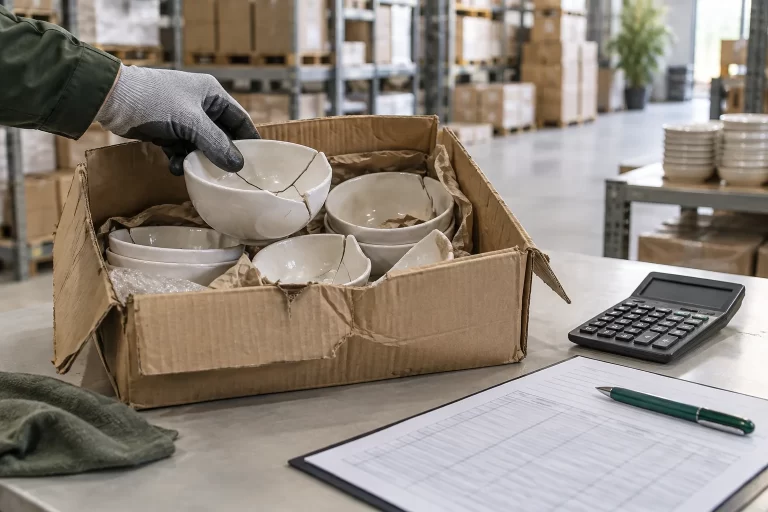


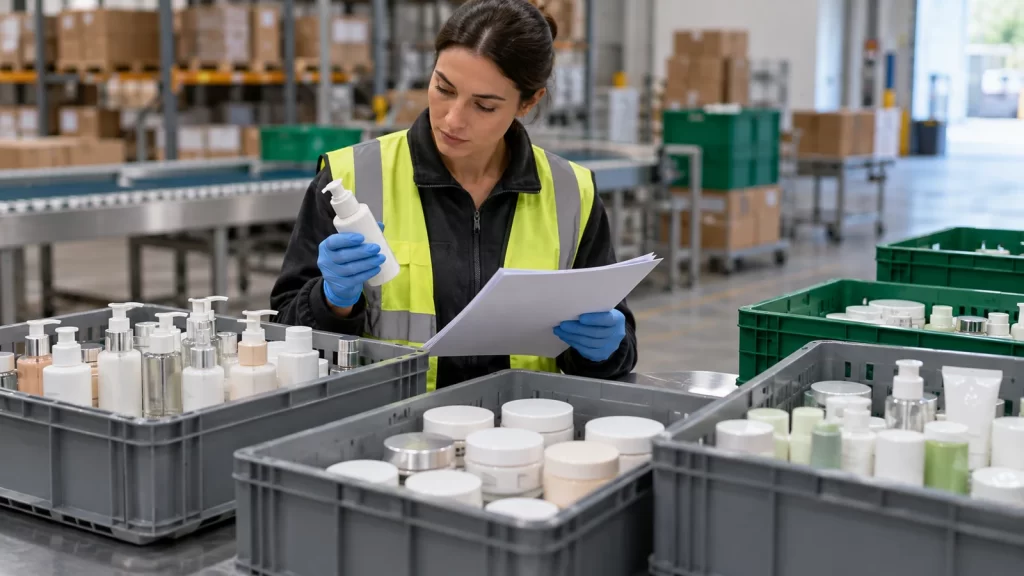
In short: A cosmetics recall aims to get the product back from the end user. A withdrawal, in contrast, stops the product in the supply chain. Under the Cosmetic Products Regulation, the responsible person who finds a product non-compliant takes corrective measures immediately. The Turkish Medicines and Medical Devices Agency (TİTCK) requests those measures and, when needed, takes them itself. Collected products often end up in disposal, and documenting that stage is your job.
One batch shows a microbiological problem. In another batch, a mandatory warning is missing from the label. Those products sit both on the shelf and in the customer’s home. So when do you recall, who decides, and where does the collected product go? This article explains the cosmetics recall process and the disposal stage.
What is the difference between a recall and a withdrawal?
The regulation defines the two terms separately (Article 4):
- Recall: Any measure that aims to return a product from the end user to the economic operator.
- Withdrawal: Any measure that aims to stop a product from reaching the market in the supply chain.
In other words, a withdrawal targets the warehouse and the shelf, while a cosmetics recall targets the consumer. In most cases, the two run together.
Who starts a cosmetics recall?
The regulation spreads the duty across the chain. First, the responsible person acts:
- The responsible person: If it thinks a product does not comply, or has reason to think so, it acts at once. It brings the product into conformity, withdraws it, or recalls it. If the product poses a risk to human health, it also informs the Agency immediately (Article 8(2)).
- The distributor: If it reaches the same view, it makes sure that someone takes corrective measures. In addition, it informs the Agency and the responsible person immediately when there is a risk (Article 9(3)).
- The Agency: If someone ignores the listed provisions, it asks the responsible person to take every corrective action within a reasonable period. This includes withdrawal or recall (Article 28). Moreover, it asks distributors for withdrawal, recall, or destruction (Article 29).
In the regulation, “the Agency” means TİTCK (Article 4(p)). The President of TİTCK also executes the regulation (Article 40). In addition, the Agency carries out market surveillance. For example, it sets the rules on sampling, warnings, withdrawal, and destruction (Article 25).
On the other hand, a compliant product can still pose a serious risk to human health. In that case, the Agency takes every measure to withdraw or recall it, or to restrict access to it (Article 30).
How does the process work when the Agency steps in?
First, the Agency notifies its decisions to the responsible person, with reasons. However, it first gives the responsible person a reasonable period to state its view, unless urgent action is needed (Article 31(1)-(2)).
In two cases, though, the Agency does not wait. The first case is a serious risk that needs urgent action. The second case is a responsible person who has not taken the necessary measures in time. Then the Agency bans or restricts the product, or withdraws or recalls it. If nobody can make the product safe, it destroys the product in part or in full, depending on the risk. The economic operator pays these costs (Article 31(4)).
What do the cosmetics recall notice and consumer rights look like?
For a product that poses a risk, the economic operator announces the measure and the risks. It does so on its own or at the Agency’s request (Article 31(5)). Law No. 7223 sets the content in its Article 18. The notice names the brand, model, or type. If possible, it shows a photo. In addition, it states the measure, describes the problem, gives the operator’s contact details, and explains how to avoid the risk.
The consumer’s right in a recall is clear as well. The operator offers the user who hands the product in at least one option. It can fix the problem. It can pay the retail value on the delivery date. Or it can replace the product with a safe, equivalent one. Moreover, the operator that recalls the product bears all recall costs (Law No. 7223, Article 19).
Traceability is part of the process too. If the Agency asks, the responsible person shows to which distributors it supplied the product. This covers three years from the date it supplied the batch to a distributor (Article 10). Furthermore, after a serious undesirable effect, the responsible person and distributors report it at once to the Agency and the manufacturer (Article 26).
How do you dispose of a product after a cosmetics recall?
A collected product takes one of two routes. You correct it and sell it again, or you destroy it. If nobody can make the product safe, destruction is unavoidable. Indeed, Law No. 7223 lists destruction under suitable conditions, or rendering the product unusable, as a measure for products with a serious risk (Article 16(6)(d)). Once the product becomes waste, the Waste Management Regulation applies. You collect the waste separately and keep records. Then you send it to a facility with a permit or an environmental license.
The biggest risk is that a recalled product returns to the market. So the disposal must stay under control. We explained the risk of uncontrolled disposal in our article on protecting brand value during disposal. After a cosmetics recall, the steps run like this:
- Identify the batch: First, you pin down the product by the batch or serial number on the label (Article 22(1)(d)).
- Count the chain: Then you match the quantities in your warehouse, at distributors, and in returns against your records.
- Hold it apart: That way, you keep returned goods in a separate area, away from sales stock.
- Ship it sealed: Next, you send the goods to a licensed facility with a count record, in a sealed vehicle.
- Destroy and document: The facility makes the goods unusable. In addition, you keep the disposal record, the delivery document, and the photos.
- Report: Finally, you report to the competent authority that you applied the measure fully for every product (Law No. 7223, Article 16(6)(e)).
The process is simpler for products that you destroy only because they expired. We explained it in our article on expired cosmetics disposal.
How do the cost and the tax of a cosmetics recall work?
The operator that recalls the product pays the recall costs. However, writing off the cost of the collected product and correcting VAT are separate questions. The answer depends on whether the goods count as lost or as impaired. We covered this in our article on lost goods versus impaired goods. The cost side is in our article on expensing the cost of lost goods.
After a cosmetics recall, Scrap runs collection, counting, disposal, and documentation with its cosmetics waste disposal service.
Frequently asked questions
Are a recall and a withdrawal the same thing?
No. A recall aims to return a product that is with the end user to the economic operator. A withdrawal prevents the making available of a product in the supply chain (Article 4).
Who pays for the recall?
The economic operator that recalls the product pays (Law No. 7223, Article 19(4)). If the Agency withdraws or destroys the product itself, the economic operator still bears the costs (Regulation, Article 31(4)).
Must I report a risky product to TİTCK?
Yes. If a product poses a risk to human health, the responsible person reports the non-compliance and the measures it took to the Agency immediately (Article 8(2)). In a serious undesirable effect, the responsible person and distributors inform the Agency and the manufacturer immediately (Article 26).
Can I throw a recalled product in the trash?
No. If nobody can make the product safe, the Agency takes the destruction measure that fits the risks (Article 31(4)). Once the collected product becomes waste, the Waste Management Regulation applies and requires the waste to go to a facility with a permit or an environmental license.
Sources
- Cosmetic Products Regulation (Official Gazette, May 8, 2023, No. 32184 bis), Articles 4, 8, 9, 10, 22, 25, 26, 28 to 31, and 40
- Law No. 7223 on Product Safety and Technical Regulations (Official Gazette, March 12, 2020, No. 31066), Articles 16, 18, and 19
- Waste Management Regulation (Official Gazette, April 2, 2015, No. 29314), Article 9
This article follows the legislation in force on its publication date. It is for general information and does not replace legal or tax advice. Therefore, get your legal counsel’s and your accountant’s opinion before you take a concrete recall decision. If you want to plan the process together with us, you can fill in our request form.
İmha Sürecinizi Planlayalım
Vergi avantajı takvimi ve imha süreciniz hakkında ücretsiz danışmanlık alın.