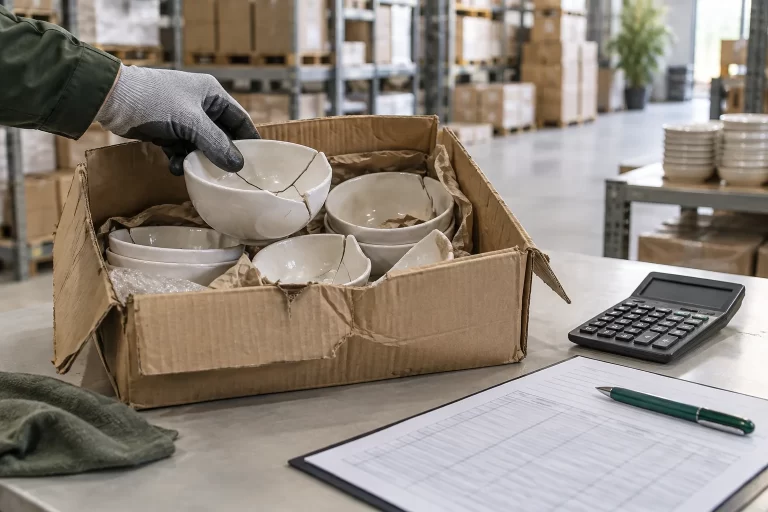


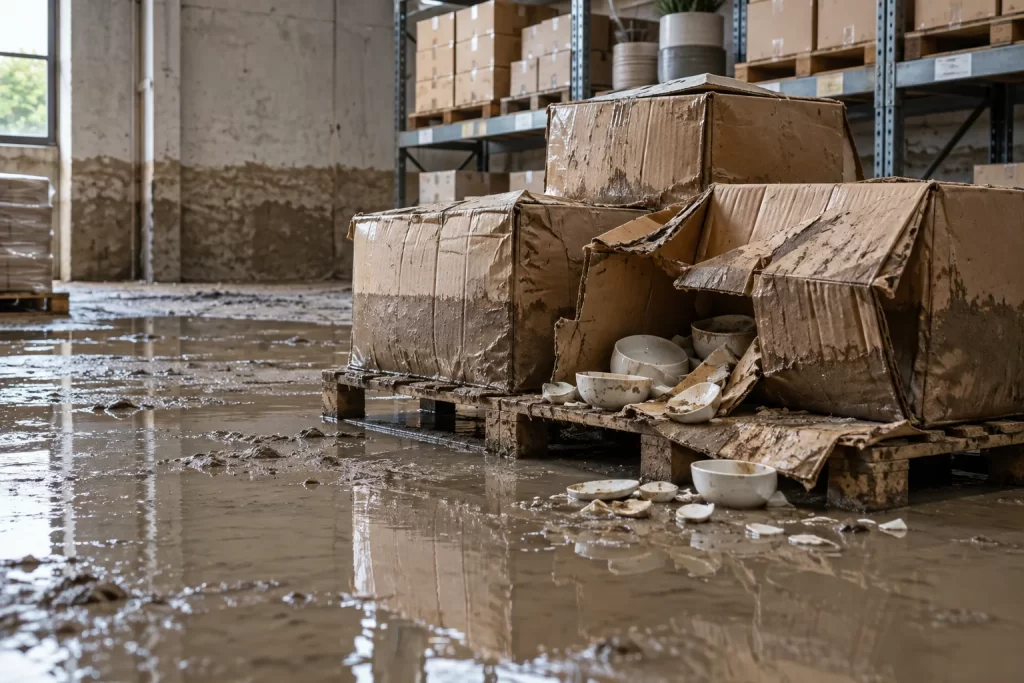
In short: You need no VAT correction for goods lost in earthquake, flood, or a fire in a location where the Ministry has declared force majeure. But for fire, the Ministry must issue a declaration; an ordinary fire does not qualify for this exception. For a depreciable fixed asset, the tax administration expects you to correct the VAT tied to the unused period even in a disaster.
After a disaster, businesses face a long list: safety, damage assessment, insurance, and reopening. Tax sits near the bottom of that list. Yet if you don’t take the right step in time, you can face an unexpected VAT liability months later. This article explains the rule and its limits for goods lost in earthquake, flood, and fire.
For which disasters is no VAT correction needed?
Article 30/c of VAT Law No. 3065 bans deducting VAT on lost goods. But it carves out three situations: earthquake, flood, and fire in locations where the Ministry has declared force majeure due to fire. In these three cases, you do not correct previously deducted VAT.
The exceptions stop there and do not expand. This exception does not cover lightning, storm, landslide, a traffic accident, or a shipwreck. In these events, you correct the VAT in the period the loss occurred. Normal losses follow a separate rule, which we covered in our article on the normal wastage rate.
Why is a declaration required for fire losses?
The law does not treat fire alone as an exception. It only covers fire in locations where the Ministry has declared force majeure. For example, if a large forest fire affected a district and the Ministry declared force majeure for that area, the exception applies. But an isolated fire at your own premises carries no such declaration. In that case, you correct the VAT on goods lost in the fire.
So the first step is to check whether a declaration exists. If it does, add its official source to your file. That way, you can show the basis for the exception with a single document on audit.
Why do trade goods and depreciable fixed assets diverge for goods lost in earthquake, flood, or fire?
For trade goods, the outcome is clear. The entire VAT stays in the deduction for goods lost in earthquake, flood, or a declared fire. The only condition is documenting the loss properly.
For a depreciable fixed asset, the picture is different. Since 2019, Law No. 7104 has applied a special rule for depreciable fixed assets: for a depreciable fixed asset lost before completing its useful life, the VAT portion tied to the period already used stays in the deduction. You correct the remaining portion. The tax administration applies this rule in disaster cases too. Indeed, after the 2023 earthquakes, businesses in the affected region had to correct the VAT tied to their unused period. Professional circles are calling on the administration to lift this practice for disasters. In short, experts still dispute this point — so get expert advice or an advance tax ruling (özelge) for a specific case.
Example: stock and a truck lost in the same earthquake
A textile company loses both its fabric stock and a truck in an earthquake. The company paid TRY 400,000 in VAT when it purchased the fabric. The truck had a 5-year useful life, the company had used it for 2 years, and it paid TRY 250,000 in VAT when it purchased the truck. The figures are illustrative only.
| Asset | VAT at purchase | Deduction preserved | Corrected (per current practice) |
|---|---|---|---|
| Fabric stock (trade goods) | TRY 400,000 | TRY 400,000 | TRY 0 |
| Truck (fixed asset, 2/5 used) | TRY 250,000 | TRY 100,000 | TRY 150,000 |
The same event produces two different outcomes for two different assets. For businesses with heavy fixed-asset holdings, this difference has a direct impact on cash planning.
What happens to a fixed asset that is damaged but not destroyed?
Not every instance of damage counts as lost goods. If you can repair the asset and keep using it, the lost-goods treatment does not apply. Instead, Article 317 of the Tax Procedure Law (VUK) opens the extraordinary depreciation route. Under this route, the Ministry sets a special depreciation rate for the value loss caused by the disaster. A similar distinction applies to stock; we covered it in our article on lost goods versus impaired goods.
What should your file contain after a disaster?
- an official damage assessment report and a document showing the date of the event,
- a valuation commission decision or an independent expert report,
- for fire, the official source of the force majeure declaration,
- a breakdown of the type, quantity, and cost of the lost goods,
- for a depreciable fixed asset, the date you capitalized it, its useful life, and the calculation of the period used,
- if insured, the expert report and the correspondence on the indemnity.
Finally, insurance indemnity does not change the VAT correction, because an indemnity is not consideration for a supply. It does, however, create a separate calculation for income and corporate tax. So, for goods lost in earthquake, flood, or fire, assess any insurance indemnity separately on the income side.
Frequently asked questions
Do I correct the VAT on goods lost in an earthquake?
Not for trade goods lost in earthquake, flood, or a declared fire. Article 30/c of VAT Law No. 3065 treats these as exceptions. You just need to document the loss properly.
Does a fire at my premises qualify for the exception?
Not unless the Ministry has declared force majeure for that location due to fire. In that case, you correct the VAT on the lost goods.
What happens if a fixed asset is lost in an earthquake?
The tax administration expects you to correct the VAT tied to the unused period of a fixed asset that has not completed its useful life, even in a disaster. Experts still dispute this, so get expert advice or an advance tax ruling.
Sources
- VAT Law No. 3065, Article 30/c
- Law No. 7104, Article 9 (Official Gazette, 6 April 2018, No. 30383)
- Tax Procedure Law No. 213 (VUK), Articles 315 and 317
This article reflects the legislation in force on its publication date. It is for general information only and does not replace tax advice. Consult your financial advisor before acting on a specific case. For documented destruction of damaged stock after a disaster, you can fill out our request form.
İmha Sürecinizi Planlayalım
Vergi avantajı takvimi ve imha süreciniz hakkında ücretsiz danışmanlık alın.